

A sewage smell in your house or bathroom almost always means sewer gas is getting past a barrier that should block it. The cause is often simple, such as a dry drain trap or a worn toilet seal. It can also be a cracked pipe, a blocked vent or a failing sewer line, and those need a professional with a camera and the right equipment. In Denver, our team at PipeX handles emergency plumbing around the clock, from finding the source to repairing it, including permits and cleanup.
Key Takeaways
- The most common sources are a dry trap under a sink, tub or floor drain, a failed wax ring under the toilet, a blocked roof vent or a broken pipe.
- Pouring water into rarely used drains is a safe first check. A smell that returns, gets stronger or shows up with backups points to the sewer line.
- Odor is not a reliable warning for hydrogen sulfide, because high exposure can dull your sense of smell.
- Headaches, dizziness or nausea together with a strong smell mean you should leave the space and get medical advice.
- Sewage coming up when no fixture is in use, or wet spots in the yard, call for a plumber right away.
Table of Contents
- What sewage smell actually is
- The most common causes
- Use the pattern to find the source
- Safe steps you can take today
- Is sewer gas dangerous?
- If sewage has actually backed up
- Plumber or sewer utility: who do you call?
- What a lasting fix looks like
- Prevention before winter
- Why we handle the whole job
- Get the source found and fixed
- FAQ
- Sources
What sewage smell actually is
Your home’s drains connect to a sewer or septic system full of gases from decomposing waste. Plumbing is built to keep those gases out: water-filled traps under fixtures, vent pipes that run to the roof, and sealed joints. A sewage smell means one of those defenses has failed.
Sewer gas is a mix, and the rotten-egg part is hydrogen sulfide. That matters for safety, covered below.
The most common causes
A dry P-trap
The curved pipe under a sink or tub holds standing water that separates indoor air from gases in the drainage system. When a fixture goes unused, that water evaporates and the trap becomes an open path for sewer gas. Guest bathrooms, basement showers and utility sinks are the usual suspects.
Basement floor drains are the same story. The University of Minnesota’s onsite sewage program calls a dried-out basement floor drain trap a very common cause of odors inside the house and recommends periodically filling floor drain traps with water. Denver’s dry climate makes evaporation faster than many homeowners expect, especially in heated homes in winter.
A failed toilet wax ring
A wax ring seals the toilet base to the drain flange. When it fails, or the toilet rocks, gas escapes at the base. The City of Pueblo lists a failed wax ring, a dry trap or a broken pipe as the likeliest causes. Another sign is stagnant water from a hidden leak around the toilet, which can also smell foul.
A blocked or leaking vent
Vent pipes let air in so drains flow and gases rise out above the roof. The Wisconsin Department of Health Services says sewer gas can enter through a leaking or blocked plumbing roof vent, and it advises occasionally checking the roof vent for leaves or bird nests. The US EPA adds that vents can be obstructed by debris or freeze during prolonged cold spells, which is relevant for Colorado winters. A vent problem often shows up as gurgling drains alongside the smell.
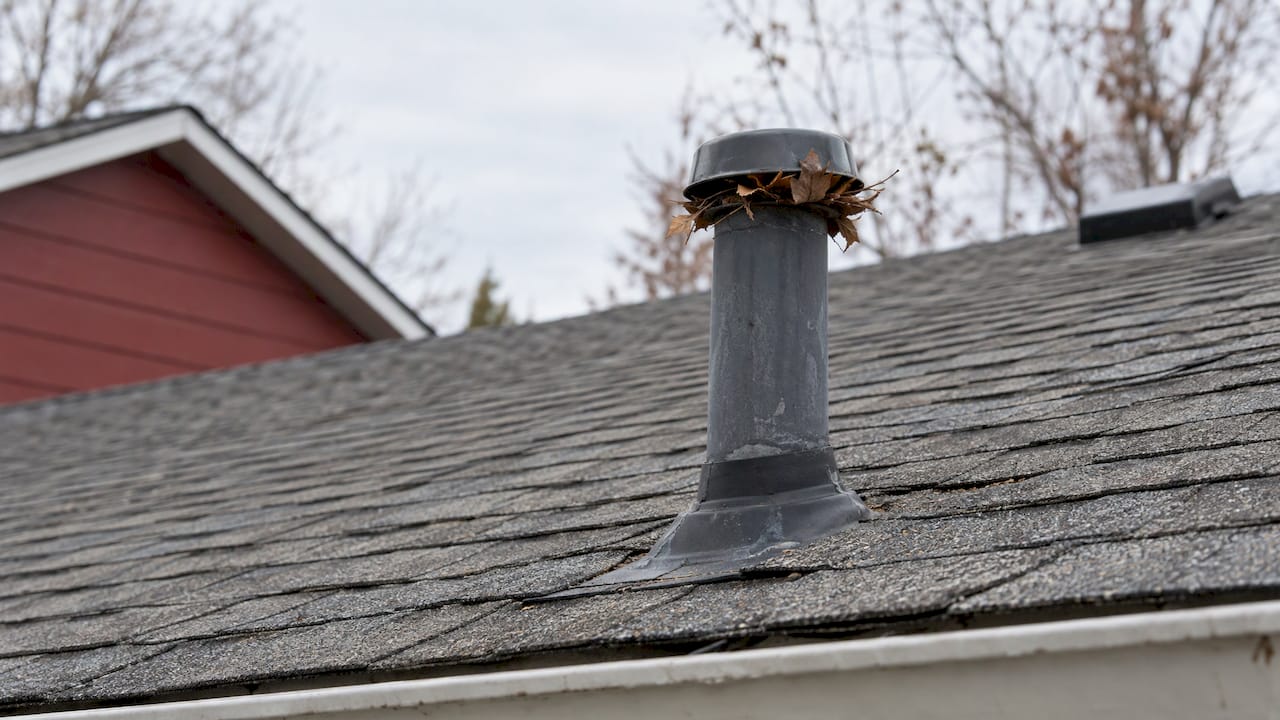
A broken or cracked pipe
A cracked drain line inside a wall, under a slab or in the yard lets gas and moisture escape. The same Wisconsin page notes gas can also enter through foundation cracks when it is in the soil next to the house. This cause does not respond to water in the traps. If the smell persists after you have refilled every trap, the line itself needs to be inspected.
A sewer line clog or collapse
Roots, grease, scale and shifted pipe slow the flow and hold waste in the line, where it ferments and smells. Typical companions are slow drains in several fixtures, gurgling toilets and occasional backups. This is where the smell stops being a nuisance and becomes a repair question.
A septic system problem
If your property is on septic, which some properties around the Denver area are, the EPA says a drainfield that is not working properly can be another reason you smell odor indoors or near the system. Soft, wet or spongy soil above it, especially without recent rain, is a sign of failure.
Use the pattern to find the source
Where and when the smell appears narrows the list quickly.
| What you notice | Likely source |
|---|---|
| One bathroom, worse after the room has been closed up | Dry trap or toilet seal |
| Smell at the toilet base, toilet rocks | Wax ring |
| Smell in the basement near the floor drain | Dry floor drain trap |
| Gurgling plus smell in several rooms | Vent blockage or main line clog |
| Smell everywhere, plus slow drains or backups | Sewer line |
| Smell outside, near the yard or cleanout | Sewer line, cleanout or septic |
A smell that shows up only after the house has been closed up for a while points to a slow source that ventilation normally hides, such as a dry trap. Keeping a short log for three to five days, noting time, room and strength on a 1 to 5 scale, helps show the pattern. That log is also useful to hand a plumber.
Safe steps you can take today
- Run water in every drain. Pour a quart or more into each sink, tub, shower and floor drain, including ones you never use. The Wisconsin guidance recommends flushing floor and sink drains to keep traps full.
- Check the toilets. Press on each one. If it moves or you see moisture at the base, the seal needs replacing.
- Look for a roof vent obstruction only if you can do it safely from the ground or a stable position. Otherwise leave roof access to a professional.
- Ventilate. Open windows and doors while you investigate.
- Note what comes back. If the smell returns within a day or two after the traps are full, the problem is not a dry trap.
If the smell returns after step 5, stop troubleshooting and have the line inspected. A video inspection shows the inside of the pipe, so a repair is based on what is actually there rather than a guess. Guessing is expensive. See our page on what a sewer camera inspection reveals.
Is sewer gas dangerous?
In small amounts, sewer gas is mostly an unpleasant nuisance. In higher concentrations, or in enclosed spaces, it is a real hazard, and the smell cannot be trusted to warn you.
The CDC’s ATSDR reports that hydrogen sulfide is noticeable at very low levels, but people lose the ability to smell it after about 2 to 15 minutes at around 100 ppm. It also states that short-term exposure above 150 ppm quickly affects the respiratory, cardiovascular and nervous systems. A smell that seems to fade is not always a smell that is gone.
The Wisconsin Department of Health Services adds that the most concentrated levels collect where the gas is entering, often in basements, and that very low oxygen levels can cause unconsciousness quickly and without warning.
What to do:
- If you have headaches, dizziness, drowsiness or nausea and suspect sewer gas, leave the area and see a doctor.
- If you believe high concentrations are in an enclosed space, evacuate and call the fire department. Avoid anything that could ignite gas, such as flames, switches or lighters.
- Children, pets and anyone with breathing conditions should stay out of the affected room until it is aired out.
If sewage has actually backed up
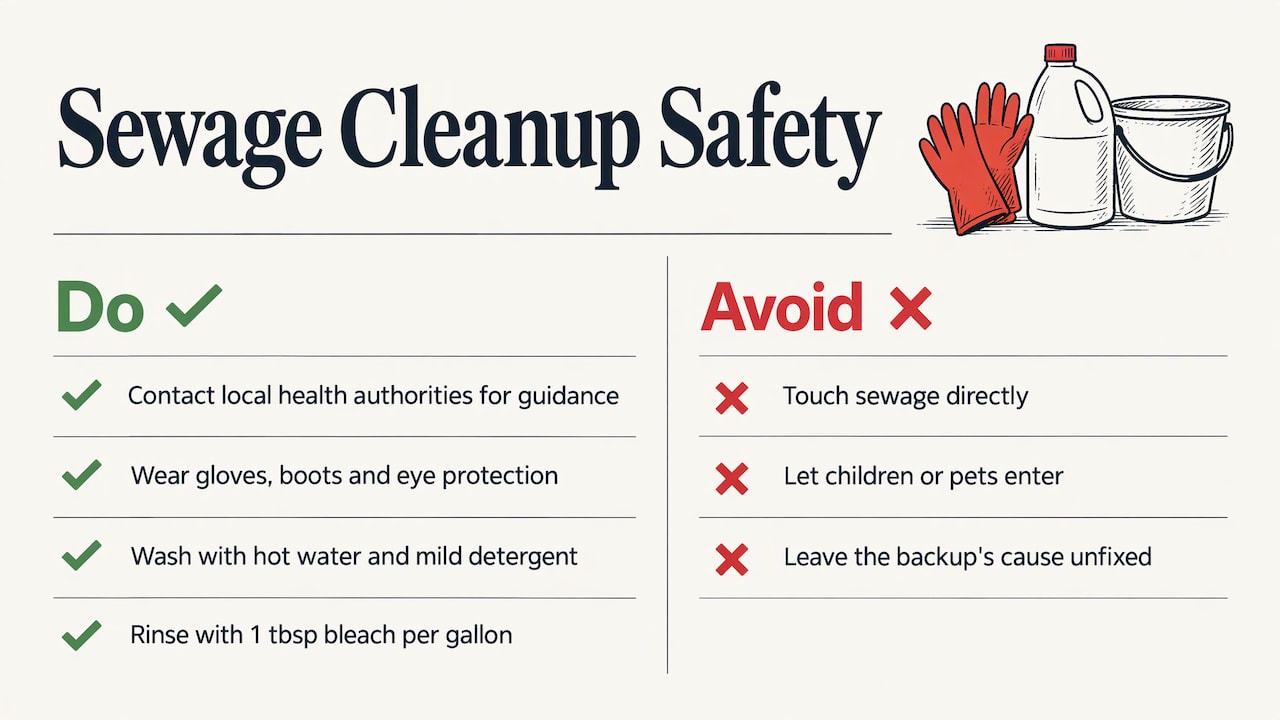
A smell is one thing. Visible sewage is another, because it can carry pathogens. The EPA advises avoiding contact with it and contacting your local health department or regulatory agency for guidance. For indoor spills, the Washington State Department of Health recommends rubber gloves and boots, eye protection, keeping children and pets out, and cleaning hard surfaces with hot water and mild detergent, then rinsing with one tablespoon of unscented household bleach per gallon of water. Open windows and doors to circulate air. Massachusetts guidance adds that you should protect cuts and scrapes and wash and disinfect any wound that touches sewage.
Once the area is safe, the cause of the backup still has to be found and fixed, or it will happen again.
Plumber or sewer utility: who do you call?
The dividing line is where the problem sits. Fairfax County, Virginia, explains the logic: if a backup happens only when you use toilets, tubs, washers or sinks, you likely need a plumber. If sewage backs up when you are not using any fixtures, the problem may be in the public main line, and the utility dispatches a crew. The same county tells residents to report an odor outside the home right away.
In Denver, the private line runs from your house to the connection with the city main. Everything on your side is yours to repair. A camera inspection tells you which side the fault is on, which saves a lot of back and forth.
| Situation | Next step |
|---|---|
| Smell inside, traps filled, still smelling | Plumber with camera inspection |
| Gurgling, slow drains in several fixtures | Plumber, likely drain cleaning or hydro jetting |
| Smell or sewage outside near the street | Report it to the sewer utility, then have your private line checked |
| Sewage backing up with no fixture in use | Contact the utility and a plumber |
| Strong gas smell, symptoms | Leave, call 911 or the fire department, see a doctor |
What a lasting fix looks like
The repair depends on the cause.
- Dry traps: Refill them, and keep unused fixtures flushed on a schedule.
- Wax ring: Reset the toilet with a new seal and check the flange.
- Clogged line: Hydro jetting uses high-pressure water to scour grease, roots and buildup from the pipe wall.
- Damaged line: Spot repair or replacement, depending on what the camera shows. Our guide to sewer line repair versus replacement walks through the signs and methods.
- Septic trouble: Inspection and service of the tank and drainfield, covered on our septic systems page.
For businesses and property managers, recurring odors in restaurants or multi-unit buildings often trace to grease or main line issues. Our commercial services cover grease trap cleaning and repair and commercial plumbing.
Prevention before winter
Cold snaps freeze vents and stress buried lines. A seasonal check catches problems early: fill rarely used traps, listen for gurgling, watch for slow drains and look at the yard over your sewer line. Our fall plumbing checklist for Denver homes and businesses covers sewer and water line checks to do before winter.
Why we handle the whole job
Most sewage smell calls start with a homeowner who has already poured water down every drain and still smells it. At that point the useful question is no longer what to try next but what is actually in the pipe.
That is why we lean on inspection first. A camera tells us whether we are looking at a clog, a cracked section or a vent issue, so the repair matches the problem. If the answer is a line that needs work, we are a turnkey provider: we handle the project from permits to cleanup, and for emergencies we are available 24/7.
Denver’s freeze and thaw cycles, and its older neighborhoods with aging lines, make early attention worth it. A smell is the cheapest warning you will get.
Scott
Get the source found and fixed
If the traps are full and the smell keeps coming back, or sewage is backing up, our team can inspect the line and repair it. We provide emergency plumbing 24/7 across Denver, plus sewer line repair and replacement and drain cleaning, and we manage permits and cleanup so you deal with one company.

For a non-urgent smell, request an inspection through our plumbing services page.
FAQ
Why does my bathroom smell like sewage?
The usual causes are a dry P-trap under the sink or tub, a failed wax ring at the toilet base, a blocked vent or a leaking pipe. Run water in every drain first. If the smell returns, the cause is deeper in the plumbing and needs an inspection.
Can a sewage smell make you sick?
It can. Headaches, dizziness, drowsiness or nausea with a strong smell are reasons to leave the area and see a doctor, according to the Wisconsin Department of Health Services. If you think concentrations are high in an enclosed space, evacuate and call the fire department.
How do I get rid of a sewage smell in my house?
Fill every trap with water, check that toilets are sealed and open windows to ventilate. If the odor remains, have a plumber find the source, because only fixing the cause makes the smell stay gone.
Why does the sewer smell come and go?
Intermittent smells often follow use patterns. Traps dry out between uses, vents clog or freeze in cold weather, and a partial line clog releases gas when water moves through it. A short log of time, room and strength helps pinpoint the pattern.
When should I report a sewage smell to the city?
Report a smell outside the home right away, and report any backup that happens when no fixtures are in use, since that can point to the public main line. For problems that show up only when you use your fixtures, a plumber is the right call.
Sources
- Air: Sewer Gas | Wisconsin Department of Health Services
- Resolving Septic System Malfunctions | US EPA
- Troubleshooting | Onsite Sewage Treatment Program, University of Minnesota
- Does Your Bathroom Smell Like Sewage? | HowStuffWorks
- Tracking Down a Mystery Smell at Home | Detect Magazine
- Hydrogen Sulfide ToxFAQs | ATSDR
- Sewage Spills: Cleaning Them Up | Washington State Department of Health
- Flooding and Sewage Back-ups: Home Care Guide | Mass.gov
- Wastewater FAQ | Fairfax County Public Works