
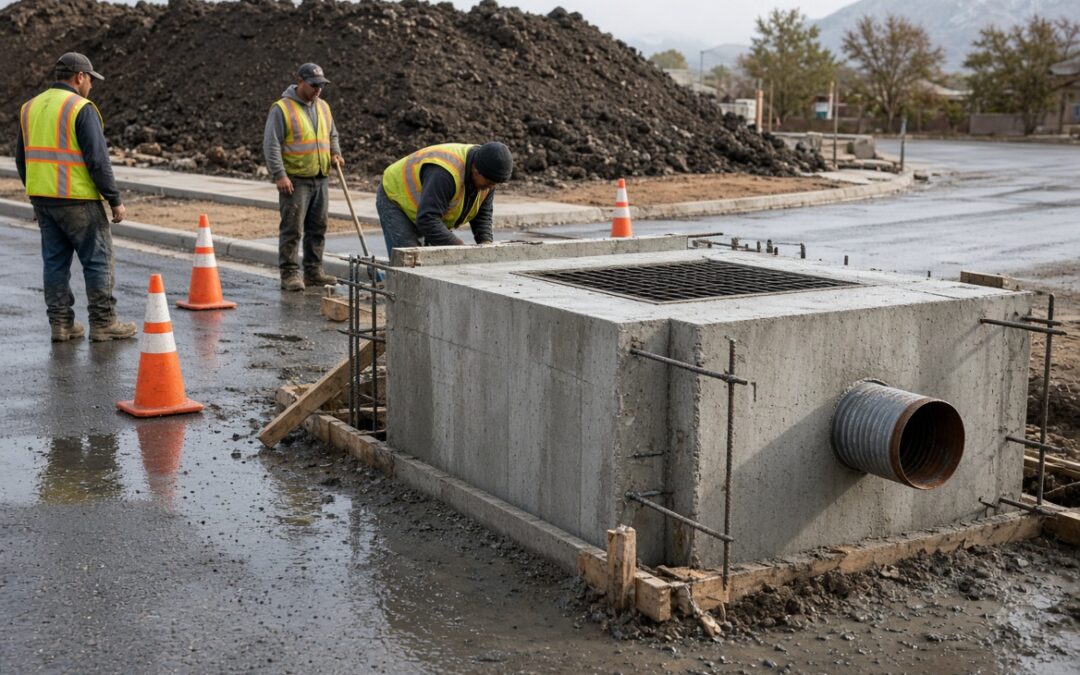
Stormwater in Denver does not wait on a catalog box. When the grade, the pipe, and the agency detail do not line up, Pipe X builds the structure on site: cast-in-place concrete drainage and utility structures for Denver, Metro Denver, and the Colorado Front Range.
This is the same work behind our storm inlets and detention systems page. Inlets collect the water. Detention holds the extra. Cast-in-place concrete is how the inlet, manhole, headwall, or outlet actually meets the plan.
Why cast-in-place concrete still wins on Front Range jobs
Precast is fast when the layout is standard. A lot of Denver and Front Range sites are not. Existing utilities, odd angles, deep inverts, and custom storm details leave a gap a catalog unit cannot close. Cast-in-place concrete is formed, poured, and finished in the hole so the structure matches the pipe and the grade.
That is the difference between a field fit-up and one structure. Pipe X crews pour the box, pick up the pipes, and leave a stormwater concrete structure the inspector can sign.
Cast-in-place structures we pour
- Cast-in-place inlets — curb, area, and combination inlets tied into the storm system
- Cast-in-place storm structures and drainage structures — custom boxes and junctions
- Cast-in-place outlet structures and concrete outlet structures at ponds, detention, and outfalls
- Cast-in-place headwalls and concrete headwalls at pipe ends and channel transitions
- Cast-in-place manholes and CIP manholes — standard and deep
- Box-base manholes when the invert and the pipes need a poured base
Work covers municipal storm, commercial sites, and utility structures across Denver and Colorado.
How this ties to storm inlets and detention
A storm inlet gets water off the pavement. A detention system stores the extra so downstream pipes are not overloaded. Neither one works if the concrete structure at the grade is the wrong size or the pipes do not hit the invert. Cast-in-place lets us build that connection instead of hoping a precast unit will.
See the service page: Storm Inlets & Detention Systems.
What to send us
Plan sheet, structure number, and the city or metro district. We will tell you whether the structure should be cast-in-place or if a precast unit will do. Call 303-572-3478 or use the contact form.
Frequently asked questions
What storm inlet and detention work does Pipe X do in Denver?
Pipe X designs, installs, maintains, and repairs storm inlets and detention systems in Denver, Metro Denver, and along the Colorado Front Range. That includes collection inlets, detention and storage, repairs, and upgrades so the system meets the civil plan and local stormwater rules.
Do you build cast-in-place concrete drainage and utility structures?
Yes. Pipe X constructs cast-in-place concrete drainage and utility structures throughout Denver, the Denver Metro area, and the Colorado Front Range. Crews pour inlets, outlet structures, headwalls, manholes, box-base manholes, and custom storm and utility structures on site.
When is cast-in-place concrete better than precast?
When the grade, pipe angles, or agency detail will not match a catalog box. We form and pour to the plan. Precast still works on standard layouts. Send the sheet and we will say which way to go.
What is a box-base manhole?
A manhole with a poured concrete base sized to the inverts and the incoming pipes. Used when a standard round precast base will not pick up the pipes cleanly.
Do you maintain existing storm inlets and detention ponds?
Yes. Cleaning keeps inlets, pipes, and detention from silting in. We also repair and upgrade structures that have cracked, settled, or fallen out of spec.