
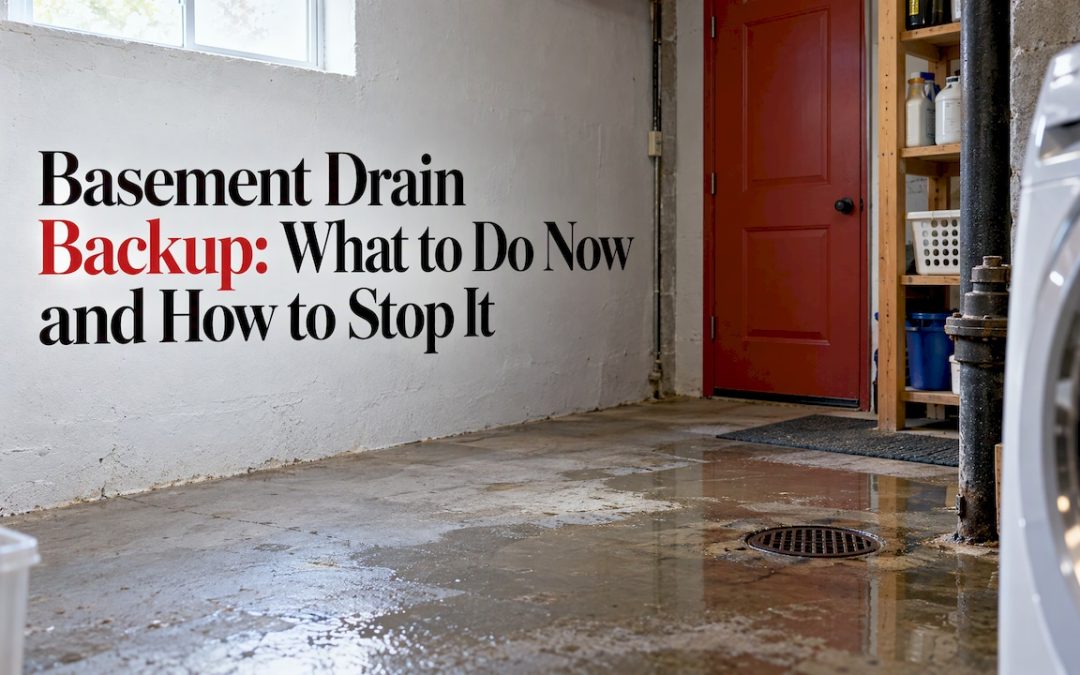
If your basement floor drain is backing up, stop using water in the house right now, stay out of the standing water, and call a licensed plumber. A backup means the pipe that carries wastewater out of your home is partly or fully blocked, and every flush, shower or wash load pushes more water toward your floor. In Denver, PipeX handles emergency drain and sewer calls around the clock: reach our emergency team as soon as water starts rising.
Key Takeaways
- Stop all water use, including toilets, showers, dishwashers and washing machines, the moment a drain backs up.
- Treat the water as sewage: keep people, kids and pets out, and stay away from standing water if outlets or appliances are nearby.
- Where and when the backup happens tells you whether the blockage is in your own line or in the public sewer.
- A backup that returns is usually a sewer line problem, not a drain problem, and a camera inspection finds the cause.
- Backwater valves and proper drain connections reduce the chance of a repeat. Call PipeX for a quote on a permanent fix.
Table of Contents
- What to do in the first 15 minutes
- Is it a clog, your sewer line, or the city sewer?
- Why basement floor drains back up
- What fixes it for good
- Preventing the next backup
- Cleaning up safely
- What a delay can cost
- Our approach to basement backups
- Get a Denver plumber on the line
- FAQ
- Sources
What to do in the first 15 minutes
Speed matters because every gallon you send down the drain can come up on your floor.
- Stop using water. Don’t flush, run the shower or start the washer. This Old House lists gurgling, foul odors and water rising in the tub when the washer runs as classic sewer backup signs and says to stop all plumbing use immediately.
- Mind the electricity. If water has reached outlets, appliances or wiring, don’t walk into it. This Old House advises shutting off power to that circuit only if you can do so safely, and otherwise calling an electrician or emergency services. The Madison Metropolitan Sewerage District adds that you should never use electrical equipment while standing in water.
- Keep people out. Backup water can carry bacteria, viruses and other organisms. Illinois Department of Public Health advises keeping children out of contaminated areas and not eating or drinking anything the water touched. The Windsor-Essex County Health Unit says pregnant people, children and people with respiratory illness should not handle sewage or contaminated materials.
- Document it. Photograph the water from a dry spot. You will want those images for your insurer.
- Call a plumber. If the cause is in your line, this is the call that stops the problem. We answer emergency calls 24/7 in Denver.
Is it a clog, your sewer line, or the city sewer?
The Milwaukee-area sewerage district MMSD explains that a backup from a floor drain always means the sanitary lateral is partly or fully blocked. The lateral is the private pipe that runs from your house to the street sewer. The pattern tells you where to look:
| What you notice | Likely cause | Who to call |
|---|---|---|
| Dry weather, backup after a shower or laundry load | Your lateral is blocked by your own water | A plumber, after stopping all water use |
| Rain, and neighbors have backups too | Public sewer is full | Your city or sewer utility |
| Rain, but neighbors are fine | Your lateral is blocked by groundwater leaking in | A plumber |
If several fixtures gurgle or clog at once, or the backup keeps returning, the problem is usually deeper than a single drain. Our guide to a main sewer line clog covers the signs in more detail. A sewage smell without visible water is also worth chasing, and this explainer on sewage smell from vents lays out what causes it. Our own page on sewage smell in your house explains when to call.
Why basement floor drains back up
Basements sit lowest in the plumbing system, so they are where trouble shows first. The Northwestern Water & Sewer District lists the usual causes:
- A blocked sewer lateral, often from tree roots or failed clay tile
- A municipal sewer backup
- Sump pumps tied into the sanitary line without a check valve
- Floor drains improperly connected to the sanitary sewer
- A basement floor lower than the sewer it drains to
The same district notes that groundwater can collect in the stone bedding around old sewer pipes and flow toward foundation drains, which can overwhelm a sump pump even when the sewer is not blocked.
For homeowners, the practical point is that grease, wipes and roots build slowly, then a heavy water load tips the line over. Drain cleaning clears a local clog. A repeat backup calls for a look inside the pipe.
What fixes it for good
Guessing is expensive. A cable through the drain may restore flow for a week and leave the real problem in place. We start with the cause.
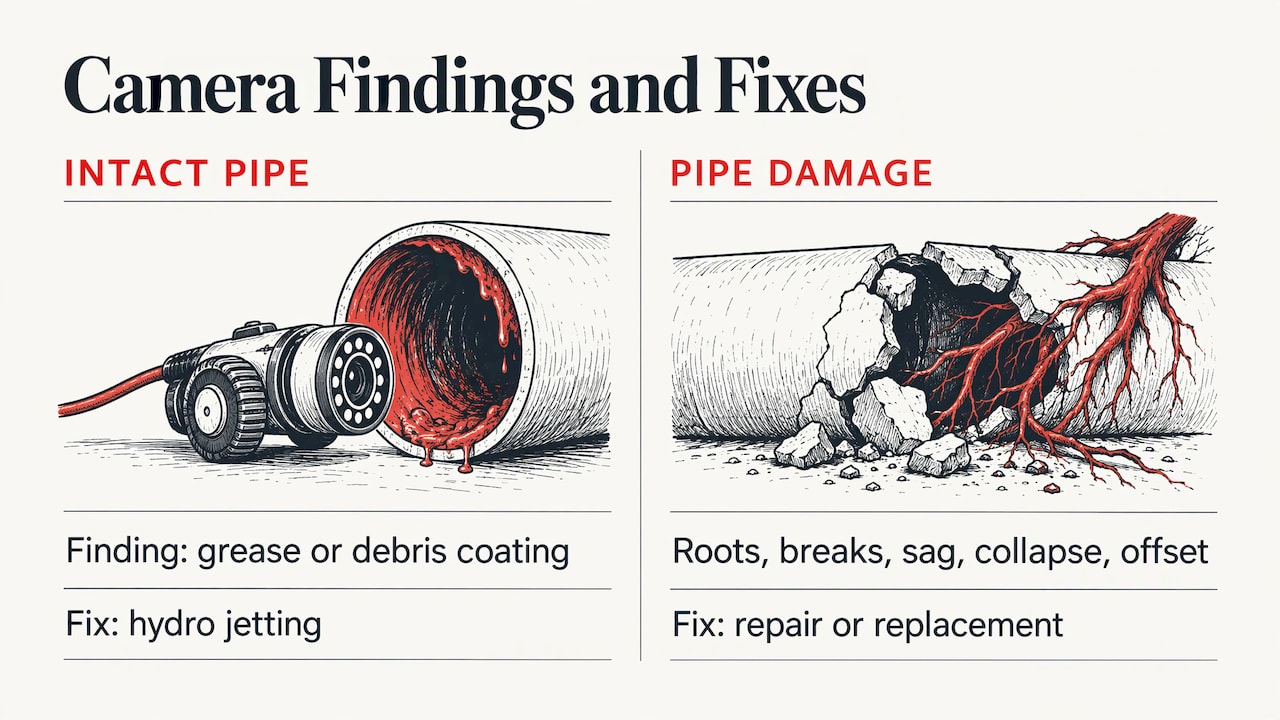
Video inspection. A camera run through the line shows roots, breaks, sagging sections or buildup, so you pay to fix what is actually wrong. Read what a sewer camera inspection reveals before you book one.
Hydro jetting. High-pressure water scours grease and debris off the pipe walls, which is the right answer when the line is intact but coated. See our page on drain cleaning and hydro jetting.
Sewer line repair or replacement. If the camera finds a collapsed, offset or root-invaded pipe, cleaning only buys time. Repair or replacement removes the cause. Our guide to sewer line repair versus replacement explains how that decision is made, and trenchless methods can replace a line without tearing up your yard. We also handle permits and cleanup, so you deal with one contractor from start to finish.
Preventing the next backup
Once the line is clear, cut the odds of a repeat.
- Install a backwater valve. Its flap floats up and blocks flow in the wrong direction. Onondaga County recommends a plug or one-way drain where a floor drain cannot be disconnected, with a licensed plumber installing it and the valve inspected and cleaned regularly. We install backflow prevention systems.
- Know the two valve types. According to Fix Up First, an inline valve set in the drain line below the floor is the more dependable choice for severe backups, while a drop-in insert is less reliable.
- Redirect roof and sump water. The Northwestern district advises draining downspouts and sump pumps onto the lawn six to ten feet or more from the foundation, not into the sewer.
- Check what the plug can and can’t do. The City of Lincoln notes a floor drain plug is the simplest option but holds only until sewage rises to the next opening, and uplift pressure can damage the floor. It advises consulting a professional before installing any backflow method.
- Keep grease and wipes out of drains, and schedule an inspection if trees grow near your line.
- Confirm your insurance. Northwestern’s district recommends making sure your policy includes sewer backup coverage, which standard homeowners policies often exclude.
Cleaning up safely
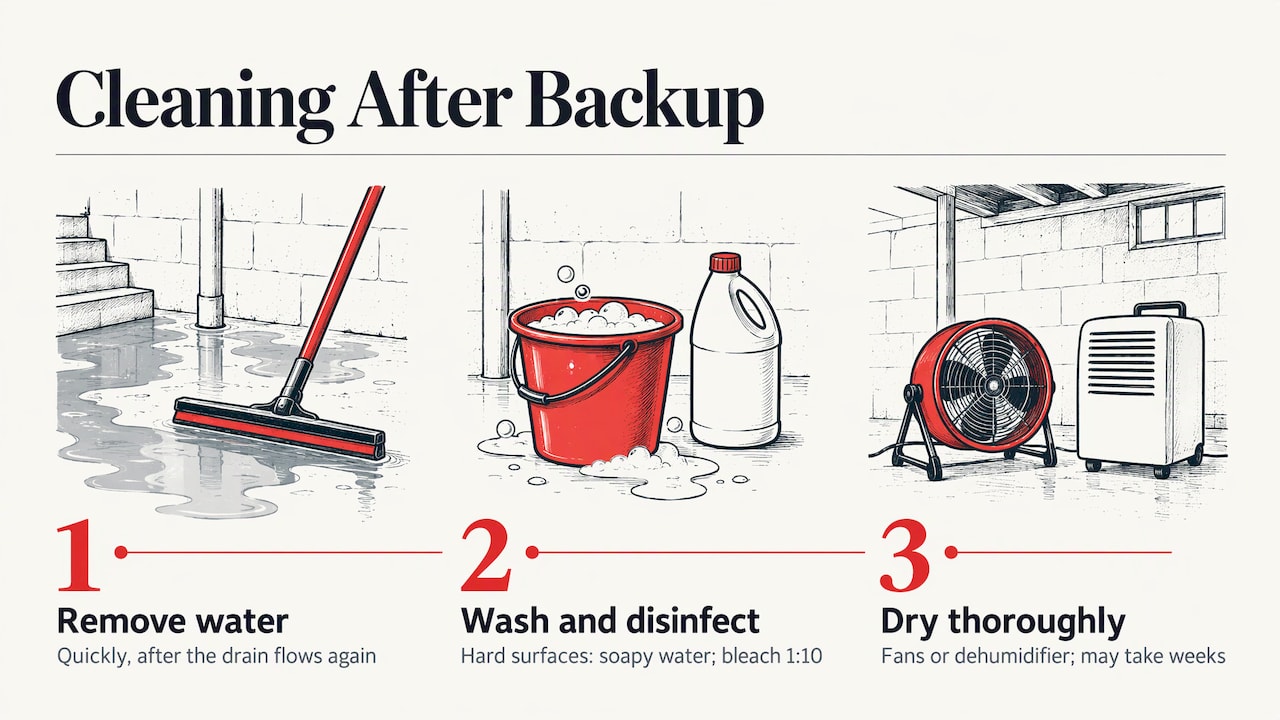
Once the drain flows again, remove water quickly. The Madison district advises washing hard surfaces with hot soapy water and disinfecting with one part household bleach to ten parts water, then drying with fans or a dehumidifier, which can take weeks. Wear rubber boots, gloves and eye protection, and throw out porous items that cannot be cleaned and dried, as NYC311 recommends. For extensive damage, bring in professional cleaning. If the water came from a pipe failure, see plumbing water damage: what to do and who to call.
What a delay can cost
Sewage damage spreads into drywall, flooring and stored belongings, and drying takes weeks. A blocked lateral that is cleared only at the surface can fail again at the next heavy rain or laundry day, and each repeat brings new cleanup costs and the health risks above. Calling early keeps a drain problem from turning into a restoration project.
Our approach to basement backups
We see the same pattern in Denver homes: a backup gets cleared, the line is never inspected, and the problem returns. Our view is that a camera look should come before any decision to clean, repair or replace, because the right fix depends on what the pipe actually shows.
Denver’s climate and aging lines put real stress on underground pipes, so we build each job around the specific line: hydro jetting where the pipe is sound, repair or trenchless replacement where it is not, and a backwater valve where the risk of a repeat is real. We handle the whole job, from permits to cleanup, and we answer emergency calls around the clock.
Scott
Get a Denver plumber on the line
PipeX provides emergency plumbing, drain cleaning and hydro jetting, video inspection, sewer line repair and replacement, and backflow prevention for homes, businesses and municipal clients, with permits and cleanup handled as part of the project. Whether the water is rising now or you want to stop a repeat, contact PipeX for emergency service or see our plumbing services.

Business and property managers can also see our commercial plumbing services, including grease trap work.
FAQ
Can a backed-up basement drain make you sick?
Yes. Sewage water can contain bacteria, viruses and parasites, and symptoms can include stomach illness, skin infections and pink eye, according to the Windsor-Essex County Health Unit. Wear rubber gloves, boots and eye protection, and keep children, pets and anyone with a weakened immune system away until cleanup is finished.
Why does my basement floor drain back up when it rains?
Either the public sewer is overloaded, or groundwater is leaking into your own lateral. MMSD suggests asking neighbors: if they have backups too, call your city or sewer utility. If they don’t, call a plumber to check your line.
Is a floor drain backup a clog or a sewer line problem?
If only one drain is slow, it may be a local clog. If the floor drain rises when a toilet, shower or washer runs, or several fixtures gurgle, the problem is likely in the main line. A video inspection confirms which.
Can I just plug the floor drain?
A plug can hold back water in a short-term emergency, but it only works until sewage finds another opening, and it can stress the floor. A backwater valve installed by a licensed plumber is the lasting protection.
Sources
- What To Do When Your Sewer Backs Up, This Old House
- Handling a Sewer Backup, Madison Metropolitan Sewerage District
- Cleaning Up After Flood and Sewer Overflows, Illinois Department of Public Health
- Sewage Backup, Windsor-Essex County Health Unit
- Why is There Water in My Basement? MMSD
- Wet or Damp Basements, Northwestern Water & Sewer District
- Preventing Backups, Onondaga County Water Environment Protection
- Sewer Backup Prevention Options for Homeowners, City of Lincoln
- How to Fix a Leaking Basement Floor Drain, Fix Up First
- Sewage or Flood Clean-Up, NYC311
- Sewage Smell From Vents: Causes and What to Do