

A storm drain cleaning service removes the sediment, leaves, trash and blockages that keep rain and snowmelt from leaving your property, and the right time to book one is before the next heavy storm, not during it. If you own or manage property in Denver, PipeX handles drain cleaning, hydro jetting and video inspection, with 24/7 emergency response when water is already backing up. Our emergency line is the fastest way to reach a crew.
Key Takeaways
- Storm drain responsibility is usually split: the city maintains public drains, and the owner maintains drains, inlets and pipes on private property.
- Official guidance generally calls for at least one inspection a year, with extra attention in fall and after winter sanding.
- Professional cleaning combines hand or vacuum removal of debris with jetting and flushing, and the removed material has to be disposed of correctly.
- Cost depends on equipment, labor, pipe length, number of catch basins and disposal.
- Commercial properties often carry written inspection and maintenance duties, so records matter.
Table of Contents
- Who is responsible for a storm drain?
- What professional storm drain cleaning involves
- How often storm drains need cleaning
- What affects the cost
- Commercial storm drain maintenance
- Signs your storm drain needs service now
- Have PipeX clear and inspect your drains
- Our perspective
- FAQ
- Sources
Who is responsible for a storm drain?
Most owners assume the city handles every drain. In practice, responsibility follows property lines. Raleigh, North Carolina splits it three ways: homeowners maintain pipes and streams on private property, the city maintains those in its right-of-way, and the state transportation department handles state roads. Washoe County says the same in principle: owners and HOAs maintain drainage facilities outside public rights-of-way and easements.
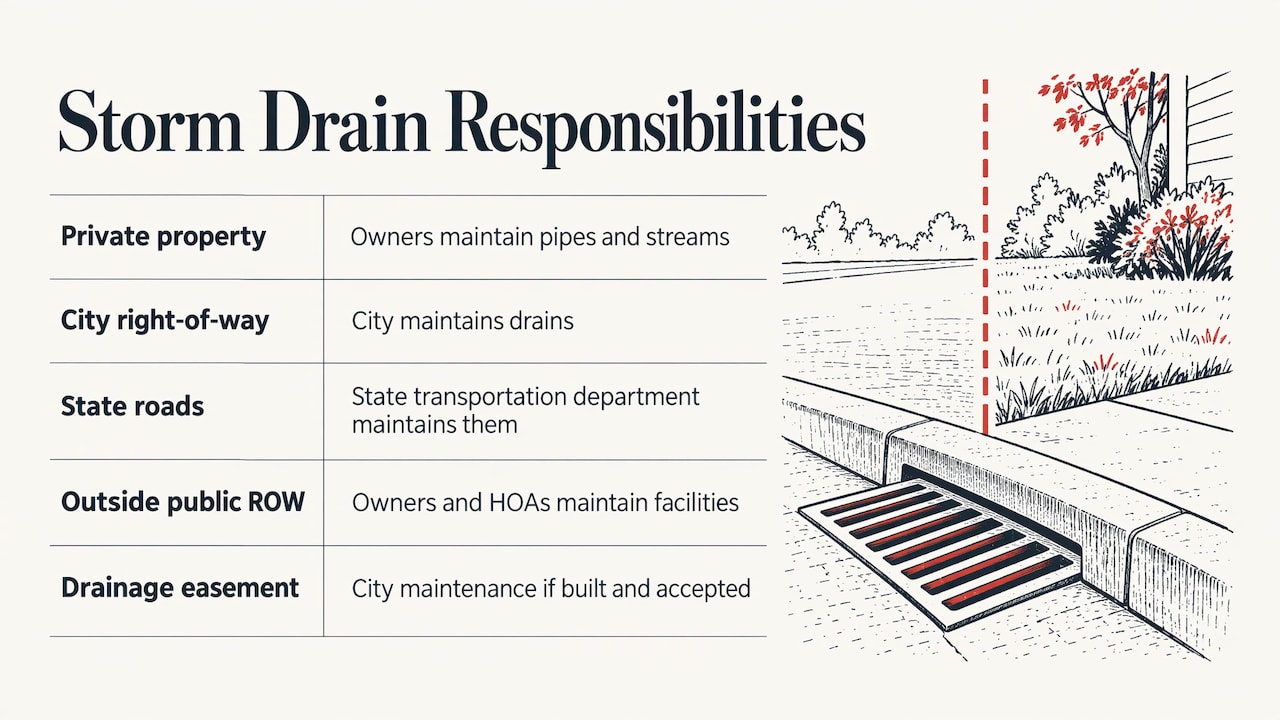
One common mistake is assuming an easement shifts the burden. Southlake, Texas explains that a drainage easement gives the right to place stormwater infrastructure on private land and may allow city inspection access, but it does not make the city responsible for maintenance unless the city built and accepted the structure.
For Denver, check with your local stormwater authority for where the public system ends on your parcel. If the clog sits on your side of that line, it is yours to clear. Our guide on who clears a storm drain clog walks through the usual cases.
What professional storm drain cleaning involves
The EPA’s best management practice for storm drain cleaning describes two stages. Dry cleaning comes first: debris is removed by hand, shovel or vacuum. Wet cleaning follows, using jetting and flushing to clear the line. Larger systems are often cleared with vacuum trucks.
Two details separate a proper job from a quick rinse:
- Contained rinse water. The EPA notes that rinse water must be captured and disposed of properly, because its contents may qualify as hazardous waste.
- Spill awareness. Connecticut DEEP tells crews to look for signs of oil or hazardous spills before removing sediment, and to keep suspect material separate until it is tested.
At PipeX, hydro jetting clears stubborn lines, and video inspection shows what is inside a pipe, so a repeat blockage is diagnosed instead of guessed at. Guessing is expensive: a line that keeps clogging may have a crushed section or a failed joint that cleaning alone will not fix. If inspection shows a damaged inlet, we cover catch basin repair and storm sewer repair as well.
How often storm drains need cleaning
There is no single national number, but official guidance clusters around a yearly cycle:
| Source | Guidance |
|---|---|
| Michigan EGLE | Inspect catch basins annually, at minimum every three years; clean sumps when 30 to 40 percent full |
| Connecticut DEEP | Evaluate and clean at least yearly; late fall is ideal, plus a spring cleaning for winter sand |
| City of Gresham, Oregon | Clean private storm drains and underground vaults annually; check inlets and outlets often in the rainy season |
For a Colorado property, the practical reading is fall and spring. Late fall clears leaves before the first snow. Spring clears the sand and debris that winter road treatment leaves behind. Add visits after construction nearby or any storm that leaves standing water.
To see how a seasonal routine works for roof drainage, this seasonal gutter maintenance checklist is a handy companion, since clogged gutters and downspouts often dump their debris into the drains below.
What affects the cost
Storm drain cleaning is priced by the job, because every system differs. The EPA’s guidance lists the main drivers: equipment, labor and disposal of collected material. As a reference point, the EPA cites a 2005 California survey that found expenditures of $8 per linear foot of drain line and $170 per catch basin. Those are public-agency figures from 2005, so they show how costs scale, not what a Denver quote will be.
In practice, these factors move a quote:
- Length of line and number of inlets. More footage and more basins mean more hours.
- Condition. Packed sediment, roots or collapsed pipe take longer than routine buildup.
- Access. Tight alleys, parking structures and buried vaults add labor.
- Disposal. Removed sediment has to be handled under solid-waste rules.
- Timing. Emergency calls during a storm differ from scheduled maintenance.
Scheduled maintenance is almost always the cheaper path, because it prevents flooded basements, damaged pavement and emergency excavation.
Commercial storm drain maintenance
For businesses, property managers and developers, storm drains are often a compliance item. Clackamas County, Oregon requires properties with private stormwater collection and treatment devices to inspect, maintain and clean them annually and report by December 31. Requirements differ by jurisdiction, so confirm what your Colorado municipality expects.
A solid commercial program includes:
- An annual inspection, with extra checks during wet or snowmelt seasons.
- Written records of structures cleaned, dates and material removed, which the EPA calls important for any cleaning method.
- Before and after photos of each basin, a practice written into at least one Orange County, California catch basin contract.
- Clean pavement around inlets. Surface sweeping keeps debris from reaching the drain, as this overview of commercial property sweeping and power washing explains.
PipeX supports commercial and municipal properties through commercial plumbing services, and handles storm inlets and detention systems. When a project needs permits, excavation or restoration, we run it from permit to cleanup so you deal with one contractor.
Signs your storm drain needs service now
- Water pooling near an inlet or in a parking lot long after rain stops.
- Slow drainage at trench drains or area drains.
- Gurgling, foul odors or soil settling along a drain line.
- Debris visible in the basin, or a sump near the level where cleaning is due.
If water is entering a building, call us right away. Our emergency services run 24/7.
Have PipeX clear and inspect your drains
PipeX is a Denver plumbing and excavation company with more than 20 years of experience. For storm drains, that means cleaning, hydro jetting, video inspection and, when a line or basin is failing, repair or replacement under the same roof. We handle the job from permits to cleanup and offer same-day service. Browse our plumbing services or request a quote.

Our perspective
Most storm drain emergencies we hear about started months earlier as a small, ignored buildup. Denver’s mix of summer cloudbursts, fall leaves and winter sanding means drains work hard in every season.
Our approach is to clean the line, then look inside it. A cleared drain that still backs up has a cause, and video inspection finds it before the next storm does. Because we also do excavation, repair and site restoration, we can move from diagnosis to fix without handing you off.
If you manage a property, put a fall and spring drain visit on the calendar and keep the records. That is cheaper than any emergency call, and we are ready for those too.
Scott
FAQ
How often should storm drains be cleaned?
At least once a year is the common standard in official guidance, and fall is the ideal time. Add a spring visit if winter sand builds up, and clean more often near construction or heavy-use areas.
Who is responsible for a storm drain on my property?
Usually you are, for drains, pipes and inlets on private land. The city maintains the public system in streets and rights-of-way. An easement alone does not shift maintenance to the city, so check with your local stormwater office.
How much does storm drain cleaning cost?
It depends on pipe length, number of catch basins, condition, access and disposal. The EPA cites a 2005 California survey of $8 per linear foot and $170 per catch basin as a scale reference only. A site visit gives a real number.
What methods clear a clogged storm drain?
Crews first remove debris by hand or vacuum, then use jetting and flushing to clear the line. Video inspection afterward confirms the pipe is sound.
Sources
- Raleigh, NC: Stormwater Maintenance and Inspections
- Washoe County: Stormwater Maintenance Responsibilities
- Southlake, TX: Your Property and Drainage
- EPA: Storm Drain System Cleaning BMP
- Connecticut DEEP: Guidance for Street Sweepings and Catch Basin Cleanings
- Michigan EGLE: MS4 Catch Basin and Street Sweeping BMPs
- City of Gresham: Private Water Quality Facilities
- Clackamas County: Watershed Protection
- Orange County, CA: Catch basin cleaning contract
- Seasonal gutter maintenance checklist
- Commercial property sweeping and power washing