

Commercial plumbing is more than a bigger version of a house call. It covers drains, sewer and water lines, grease traps, backflow assemblies and fire lines, and it has to be done without shutting down the people who use the building. For Denver businesses, property managers, developers and municipal departments, the simplest way to get that done is one contractor that handles the work from permit to cleanup. That is how PipeX runs commercial plumbing, with 24/7 emergency response when a problem cannot wait. If you have a project or a problem now, contact us through our site and we will take it from there.
Key Takeaways
- Commercial plumbing serves more users, runs on stricter codes and often has to be done around a working business.
- Most failures are found early by routine meter reads, leak checks and camera inspections, not by waiting for a backup.
- Outages, permits, inspections and cleanup are part of the job. One contractor that manages all of them keeps your schedule intact.
- Backflow prevention, grease management and fire lines carry compliance duties that belong with a licensed contractor.
- PipeX handles permits to cleanup in Denver and answers emergencies around the clock.
Table of Contents
- What commercial plumbing services include
- Why the building type changes the work
- Preventive maintenance: where failures are caught
- How work is scheduled in an occupied building
- Permits, licensing and compliance
- What affects cost and timeline
- Choosing a commercial plumbing contractor
- Talk to PipeX about your property
- Our perspective
- FAQ
- Sources
What commercial plumbing services include
A commercial plumber works on systems that may serve hundreds of people a day. They use larger pipes, more durable materials and, in many buildings, redundancy and pressure-boosting equipment that a home never needs. The scope usually falls into five groups.
- Drains and sewer lines. Cleaning, hydro jetting (high-pressure water that scours pipe walls), camera inspection and repair or replacement of failing lines.
- Water lines and mains. Leak repair, replacement of aging service lines, and fire line and hydrant work.
- Kitchen and food-service systems. Grease trap installation, replacement, cleaning and repair.
- Compliance equipment. Backflow prevention assemblies, vaults and meter pits.
- Site and storm work. Parking garage storm drainage, trench drains, excavation, grading and site restoration.
PipeX offers every item on that list in Denver. You do not need a separate crew for the plumbing, another for the trench and a third for the concrete or asphalt patch afterward.
Why the building type changes the work
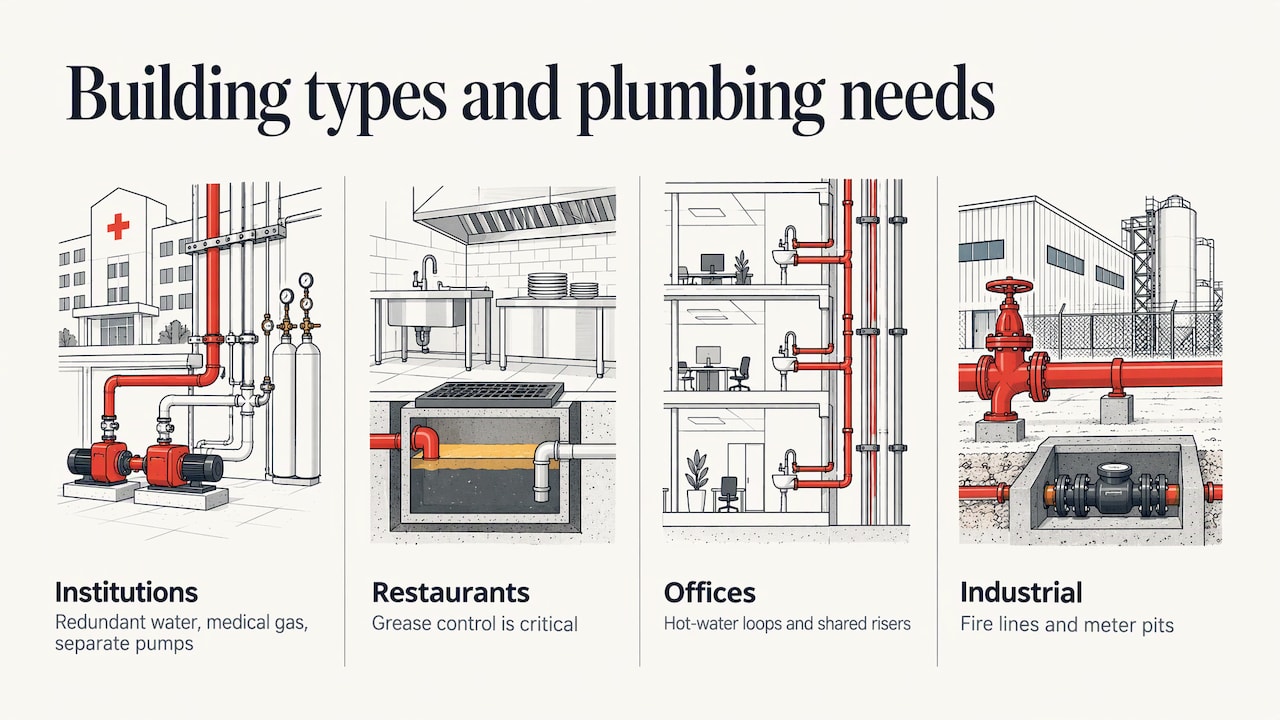
A hospital, a restaurant and a warehouse do not need the same plumbing. Hospitals, for example, are held to rules such as two water service pipes sized so the others still meet demand if the largest is lost, plus medical gas installation and testing. Large campuses commission water heaters with recirculation pumps, booster pumps, sprinkler and fire pumps, and sump pumps as separate systems with their own checklists.
Most Denver properties are simpler than that, but the principle holds. Restaurants live and die by grease control. Multi-tenant offices depend on hot-water loops and shared risers. Industrial sites have fire lines and meter pits. Describe your building type and use when you ask for a quote, because the right scope follows from it.
Preventive maintenance: where failures are caught
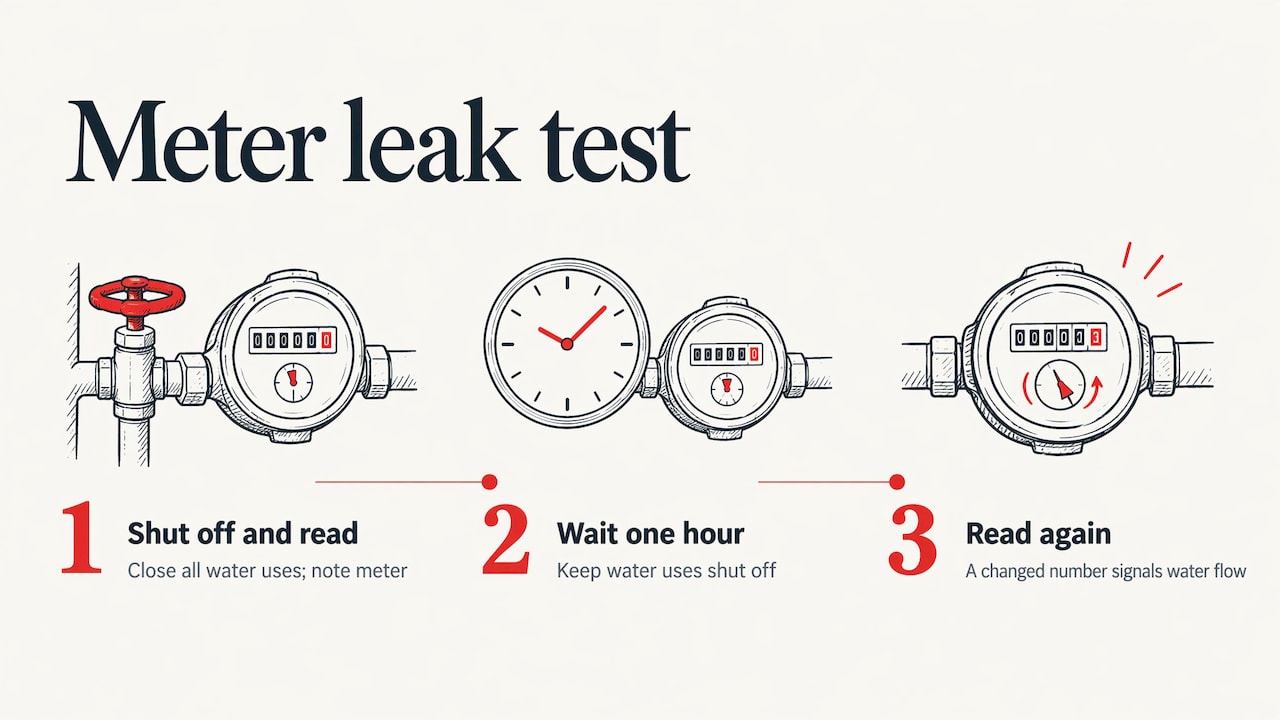
The cheapest plumbing emergency is the one that never happens. The EPA’s WaterSense program says leaks can be the greatest source of water waste in a facility, and it asks owners to read meters, submeter major equipment and add leak checks to daily rounds. Its guidance for a quick test: read the meter during off-peak hours with all water uses shut off, then read it again an hour later. If the number moved, water is going somewhere.
Drain, waste and vent piping has its own risks. The Cast Iron Soil Pipe Institute lists harsh cleaning chemicals, grease interceptor servicing, seasonal occupancy, low-flow fixtures that do not self-scour and very hot kitchen discharge as factors that should set how often a building’s drain system is serviced. Each one points to a schedule that fits the building, not a generic calendar.
Not every leak starts in the pipes, either. When ceiling stains appear, it is worth ruling out the roof as well, and a guide to commercial roof leak repair explains how those leaks are traced. If the source turns out to be a line, our commercial plumbing maintenance program is the next step, with regular hydro jetting and video inspection to keep drains and sewer lines clear.
How work is scheduled in an occupied building
This is where commercial jobs succeed or fail. Owners with strict procedures spell it out. One university’s plumbing requirements call for outage requests at least ten business days in advance, outages at agreed times, and premium-time costs for out-of-hours work built into the price. Your building may not be that formal, but the lessons apply to any tenant-occupied property:
- Plan the shutoff. Know which valves isolate which floors and who is allowed to operate them.
- Warn tenants early. A water outage that is announced is an inconvenience. One that is not becomes a complaint.
- Decide on hours. Nights and weekends protect your business but can raise labor costs. Settle this before work starts.
- Coordinate trades. Plumbing, concrete, electrical and flooring crews step on each other when nobody is managing the sequence.
- Close out properly. Larger projects end with testing, as-built drawings and operator training.
This is why a turnkey approach matters. When the same contractor handles the permit, the excavation, the pipe, the inspection and the site restoration, there are fewer handoffs where schedules slip and fewer parties to chase. PipeX manages that chain for commercial clients, so your team deals with one point of contact.
Permits, licensing and compliance
A qualified contractor should be licensed, pull the required permits and give you a written estimate. A public example: Hennepin County’s plumbing maintenance request for proposals requires licensing, permits with copies submitted to the owner, cost estimates within ten business days and a one-year warranty on completed work. Those are reasonable items to put in any scope of work, wherever the building is.
Backflow prevention deserves special attention. A cross-connection is a link between drinking water and a possible contaminant, and backflow can happen through back-pressure or back-siphonage. Public health guidance states that each business or institution is ultimately responsible for protecting its potable water with backflow prevention assemblies. PipeX installs and services backflow prevention systems, along with fire lines, hydrants and meter pits, and handles the permitting these jobs involve.
What affects cost and timeline
No honest contractor can give you a number without seeing the site. These factors move both price and schedule:
- Scope. A single clogged line and a full sewer replacement are different jobs.
- Access. Tight mechanical rooms, deep lines and paved areas add excavation and restoration.
- Occupancy. Work around tenants or customers takes sequencing, and off-hours labor is more expensive.
- Permits and inspections. Fees and review times differ by jurisdiction and project size.
- Hidden conditions. A camera inspection before a repair shows the pipe’s real condition, so the quote reflects what is in the ground instead of a guess.
Site work such as paving, grading and landscaping often sits alongside plumbing on larger projects, and this overview of commercial landscaping scope and costs shows how those costs are usually broken out. PipeX does not publish prices, so request a quote for your property.
Choosing a commercial plumbing contractor
Use a short list of criteria:
- Range. Can the contractor handle drains, water lines, grease, backflow and excavation, or will you need to bring in others?
- Emergency coverage. A burst main at 2 a.m. needs a crew, not a voicemail.
- Local knowledge. Denver’s freeze-thaw cycles and aging lines shape how repairs should be done.
- Cleanup. Restoration should be part of the scope, not your problem.
PipeX meets each of these: more than 20 years of work in Denver, same-day service, 24/7 emergency plumbing, and a turnkey process from permits to cleanup.
Talk to PipeX about your property
Whether you manage a restaurant, an office building, a development site or a municipal system, we handle drain cleaning and hydro jetting, sewer and water line repair and replacement, grease traps, backflow, fire lines, storm repair, excavation and site restoration. See our commercial plumbing services and send us your project details for a quote.

If something is leaking or backing up right now, contact us through the emergency page. It is staffed around the clock.
Our perspective
Most commercial plumbing problems we are called to are not surprises. They are drains that were slow for weeks or a leak that showed up on the water bill first. A camera inspection and a regular jetting schedule cost far less than a shutdown.
We built PipeX around the idea that the property owner should not have to coordinate five companies. We pull the permits, dig, repair, test and restore the site, and we answer the phone when it is an emergency. That is what turnkey means to us, and it is why we keep the plumbing and excavation crews under one roof.
If you are planning work or already dealing with a problem, reach out early. Earlier is almost always simpler.
Scott
FAQ
What is the difference between commercial and residential plumbing?
Commercial systems serve many more users, use larger piping and heavier-duty materials, and fall under tighter codes for sanitation, fire protection and accessibility. Work often has to happen around a running business. That is why commercial jobs call for scheduling, permits and coordination that a house call does not.
How often should a business have its drains and sewer lines serviced?
It depends on the building. Restaurants and food service need frequent grease and drain attention, while an office may need less. Industry guidance ties frequency to the building’s own risks, such as chemicals, grease and occupancy patterns. We can inspect your lines and recommend a schedule.
Does PipeX handle permits and cleanup?
Yes. We take on projects from permits through cleanup, which includes excavation and site restoration where a repair requires digging. You have one contractor accountable for the whole job.
Can you respond to plumbing emergencies at night or on weekends?
Yes. PipeX offers 24/7 emergency service in Denver for urgent plumbing problems such as burst lines, sewer backups and water main failures.
Sources
- Commercial vs. Residential Plumbing: 11 Key Differences
- Philadelphia 2021 IPC significant changes FAQ
- Northwestern General Commissioning Requirements, Plumbing
- EPA WaterSense commercial facility checklist
- EPA WaterSense at Work Section 2.2: Leak Detection and Repair
- Cast Iron Soil Pipe Institute: Operation and Maintenance
- UMB Basic Mechanical Requirements, Plumbing
- Hennepin County plumbing maintenance RFP
- Plumbing and Cross-Connection Control module