

Commercial plumbing maintenance is a scheduled, documented routine of inspecting, testing and cleaning the water, drain and backflow systems in a building, so problems are found on a quiet Tuesday and not during Friday dinner service. A workable program has four parts: a monthly walk-through, quarterly equipment checks, a yearly deep review, and a written log that shows what was found and fixed. This guide lays out each part, with the Denver-specific rules that catch property owners out.
TL;DR
- Treat maintenance as a documented program, not a repair you call for. A log of readings, observations and corrective actions is the backbone of it.
- Walk the building monthly, check pumps and treatment quarterly, review water quality and distribution twice a year, and do a full system, backflow and water-heater review annually.
- Watch the water meter. Movement when the building is empty, a sudden spike in use or a pressure drop usually means a leak.
- In Denver, every commercial water service needs an approved backflow assembly, and food businesses need a properly maintained grease interceptor.
- Bring in a licensed contractor for video inspection, hydro jetting, backflow testing and anything underground.
Table of Contents
- What commercial plumbing maintenance covers
- How often to inspect: a schedule you can adopt
- A working checklist by system
- Warning signs that a system needs attention now
- Denver rules that affect your maintenance plan
- Perspective: why we push for a program, not a service call
- Planning maintenance to cut downtime and water costs
- How PipeX supports commercial maintenance
- FAQ
- Sources
What commercial plumbing maintenance covers
A home plumbing system mostly delivers water to a few fixtures and carries waste away. A commercial one does the same at scale, with more demand, longer pipe runs, more equipment and more rules. That is why “fix it when it leaks” works poorly for a business.
A professional preventive-maintenance checklist from ASHRAE describes the scope well. It covers temperature control, circulation, flushing, trap-seal protection, identification of dead legs, and inspection of water heaters and backflow devices. In practice, a business program usually spans five areas:
- Supply side: water service lines, the main, shutoff valves, pressure regulators, meters and any vaults or meter pits.
- Hot water: water heaters, recirculation pumps, mixing valves and how hot water actually arrives at the farthest fixture.
- Fixtures: toilets, urinals, faucets, flush valves and sensors, especially the ones nobody uses much.
- Drainage: floor drains, trench drains, traps, grease interceptors, cleanouts and the building sewer line.
- Protection devices: backflow assemblies, fire lines and leak-detection equipment.
Not every building has all of these. A small office has little more than fixtures, a water heater and a sewer lateral. A restaurant adds grease handling and heavy floor drainage. A multi-tenant property or a parking structure adds storm drains, fire lines and sump equipment.
How often to inspect: a schedule you can adopt
The ASHRAE checklist builds its program around a tiered rhythm. Adapt it to your building’s size and use rather than copying it line for line:
| Frequency | What to do | Who usually does it |
|---|---|---|
| Monthly | Walk-through of mechanical rooms and fixtures; record temperatures and pressures; note anything abnormal and what was done about it | Facility staff or property manager |
| Quarterly | Check pumps and any water treatment equipment; flush low-use fixtures and outlets; test floor drain trap seals | Facility staff, with a plumber for equipment |
| Twice a year | Review water quality and the distribution system; inspect visible piping, valves and insulation | Plumber or building engineer |
| Annually | Full system review, update piping plans, test backflow devices, service water heaters | Licensed plumber and certified backflow tester |
The same ASHRAE checklist stresses the paper trail: documented readings, abnormal observations, corrective actions and follow-up. If an inspector, insurer or new building manager asks what you did last year, that log is the answer.
Adjust for how you use the building
Some businesses need tighter intervals than the baseline:
- Restaurants and food service: grease interceptors and kitchen drains need cleaning on a schedule driven by volume, not the calendar. More on that below.
- Seasonal or part-time buildings: water that sits stagnant is a problem of its own. Flush low-use fixtures regularly, and follow the manufacturer and local authority when shutting a system down or bringing it back. The AWWA/IAPMO manual on safe closure and reopening of building water systems stresses that shutdown and restart procedures must account for the authority having jurisdiction and manufacturer instructions.
- Older buildings: aging supply lines and cast-iron or clay sewer laterals deserve a camera look more often than a newer building does.
A working checklist by system
Water heaters and hot water delivery
The ASHRAE checklist includes verifying hot-water storage at 140°F (60°C) and using thermostatic mixing valves so hot water is not scalding at the fixture. It also calls for checking hot- and cold-water temperatures, hot-water delivery at the farthest outlets, and recirculation pumps. A simple monthly routine: read the tank temperature, run the farthest hot tap until it warms, and note how long that takes. If the time keeps growing, the recirculation loop needs attention.
Toilets, urinals and fixtures
Leaking toilets are among the most common sources of wasted water in commercial buildings, and they often make no noise. The EPA’s WaterSense operations and maintenance checklist recommends regular checks of tank-type toilets for leaks, broken flappers and other failures, including an annual dye test. Drop a dye tablet in the tank, wait, and see whether color reaches the bowl without a flush. It takes minutes per restroom.
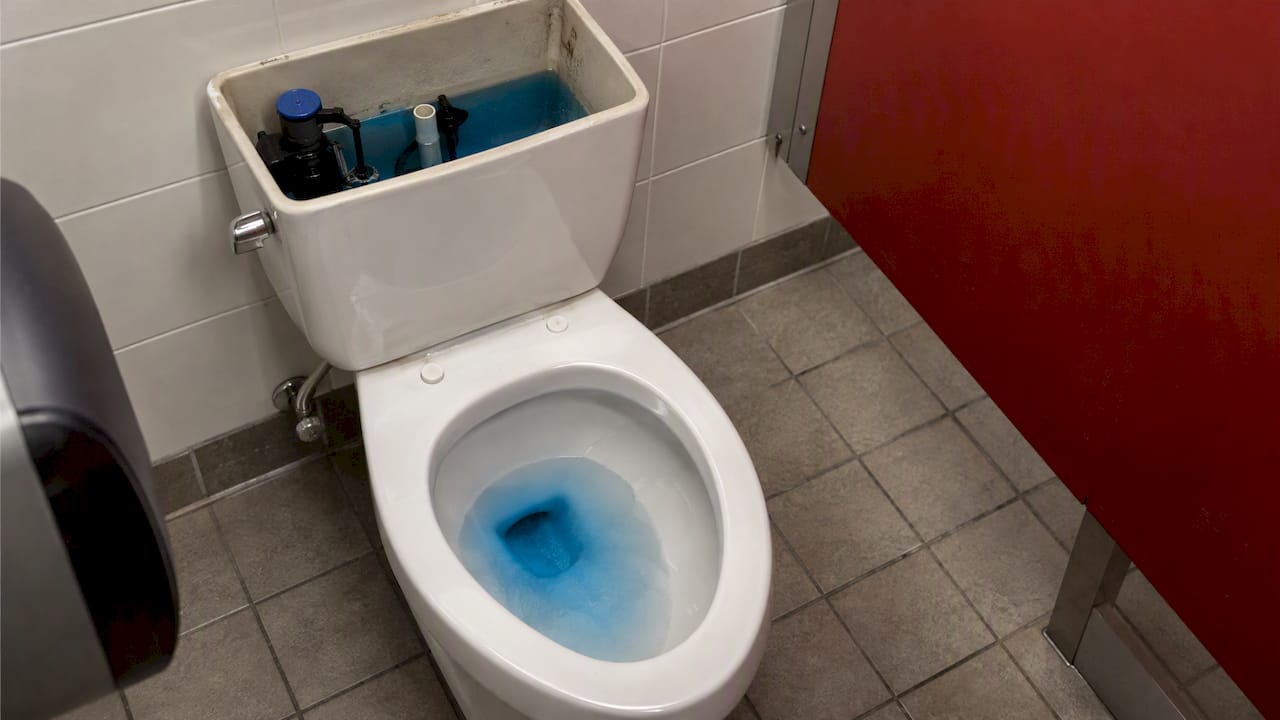
Also walk the restrooms looking for continuously flushing fixtures, dripping faucets and sensor valves that run on.
Drains, traps and the building sewer
Floor drains that rarely see water lose their trap seal to evaporation, which lets sewer gas into the space. Pouring water into them quarterly is the cheap fix. For everything beyond the trap, the tools are professional ones:
- Video inspection shows the actual condition of the line: roots, offsets, scale, grease buildup or a belly where water sits. It turns a guess into a repair plan, and guessing is expensive.
- Hydro jetting scours the pipe wall with high-pressure water, clearing grease and scale that a cable or snake only bores through.
- Cleanouts should be accessible. If staff cannot find them, find them before the emergency.
We cover the process in more detail on our pages for drain cleaning and hydro jetting and sewer line repair and replacement.
Backflow devices
Backflow assemblies are the one item on this list that is a legal requirement in most places, not just good practice. We cover that in the Denver section below.
Pumps and monitoring equipment
Sump pumps, booster pumps and ejector pumps fail quietly until the day they are needed. Quarterly, run each one, check float switches and alarms, and look for rust, vibration or heat. The EPA checklist also suggests maintaining leak-detection devices and sending their alerts to more than one employee, so an alarm at 2 a.m. does not depend on one phone.
Warning signs that a system needs attention now
Your water meter is the best diagnostic tool you own. EPA WaterSense lists the red flags: meter movement during low-occupancy periods, spikes in water use, pressure drops, leaks and continuously flushing fixtures.
A quick test: after close, with all fixtures and equipment off, read the meter, wait an hour and read it again. Any movement means water is going somewhere. Underground, that could be a service line leak that never shows on the surface.
Other signs to act on:
- Slow drains in more than one fixture, which points to the main line rather than a single clog
- Gurgling toilets or sewer odors near floor drains
- Wet spots, sinking pavement or unusually green strips over a pipe route
- Discolored water or sudden low pressure on upper floors
- Water heaters that run constantly, rumble or leak at the base
One slow drain is a nuisance. Three slow drains is a sewer line problem, and it is cheaper to camera it today than after it backs up into a ground-floor suite.
Denver rules that affect your maintenance plan
National checklists get you far, but your local water provider and city set the legal floor. ASHRAE notes that requirements may include the International Plumbing Code, local plumbing and cross-connection-control requirements, manufacturer instructions and the facility’s water-management plan. In Denver, two items come up constantly.
Backflow prevention
Denver Water’s program states that all commercial, industrial, domestic, irrigation and fire line services must have an approved backflow prevention assembly. Testing must be done by a certified backflow assembly tester, and test reports go to Denver Water’s Cross-Connection Control office. Irrigation assemblies are tested as the system is turned on for the season.
If your property sits outside Denver Water’s service area, your own provider’s rules apply, so confirm who serves you. For reference on how other states phrase the duty, New Mexico’s facilities standards require backflow devices to be tested by a certified technician at least annually, with documentation filed with the appropriate agency. Annual testing with filed paperwork is a common pattern, but check your own provider for the exact interval.
See our backflow prevention systems page for the installation and testing side.
Grease interceptors for food businesses
The City and County of Denver requires grease interceptors on premises other than single-family or duplex homes where food is prepared or processed. The same policy says new, modified or abandoned interceptors need permits, and that discharging fats, oils and grease into the sanitary sewer is illegal. If you run a restaurant, bakery, cafeteria or commissary, a documented cleaning and repair schedule belongs in your maintenance plan, and the interceptor deserves a look at every cleaning for cracked baffles or failing seals.
Fire lines and hydrants
If your property has a private fire line or hydrant, it belongs on the maintenance calendar too, even though the fire protection contractor may handle the sprinklers. The underground piping feeding them is plumbing and excavation work. Our pages on fire lines and water main and fire line repair explain what that involves.
Denver’s climate
Denver swings from hot summers to hard freezes, and the freeze-thaw cycle moves soil around buried pipe. Dry, expansive ground and aging lines make fall the right time to inspect exposed piping, insulate vulnerable runs and camera the sewer before winter. Our fall plumbing checklist for Denver homes and businesses walks through that seasonal pass.
Perspective: why we push for a program, not a service call
We have worked on Denver plumbing and excavation for over 20 years, and the pattern is consistent: the expensive jobs are rarely surprises to the pipe. They are surprises to the owner. A line that was scaling up and offsetting for years finally fails, and the repair now includes a flooded tenant space, an emergency crew and a trench across the parking lot.
We would rather see a property manager call us for a camera inspection and a hydro jetting visit in October than for an emergency call in January. The inspection is scheduled, planned and priced as a project. The emergency is none of those.
Two habits separate the buildings that stay out of trouble from the ones that do not. First, they keep records: when the drains were jetted, when the backflow assembly was tested, what the video showed. Second, they decide in advance who to call. When a main breaks, nobody wants to be searching for a contractor, so we run 24/7 emergency service and handle the job from permit to cleanup, which keeps a single team accountable for the whole repair.
If you take one thing from this guide, make it the meter test. It costs nothing and tells you more than any inspection.
— Scott
Planning maintenance to cut downtime and water costs
Maintenance pays back in two ways: fewer failures and lower water bills. The EPA suggests tracking water and cost savings over time, checking submeters on major water-using equipment and using monitoring devices to find anomalies or leaks. Here is how to make that practical:
- Baseline first. Pull twelve months of water bills and note your normal use by month.
- Read the meter on a schedule. Weekly is ideal. Log it next to your monthly walk-through notes.
- Submeter big users. Cooling equipment, kitchens and irrigation are the usual culprits.
- Rank problems by consequence. A leaking faucet is cheap and low risk. A failing sewer lateral under a retail suite is neither.
- Batch the work. Schedule jetting, camera inspection and backflow testing in one visit window to limit disruption to tenants and customers.
- Keep a repair-or-replace file. Video, photos and invoices make it easier to decide when a line has had its last patch.
What to do in-house and what to hand off
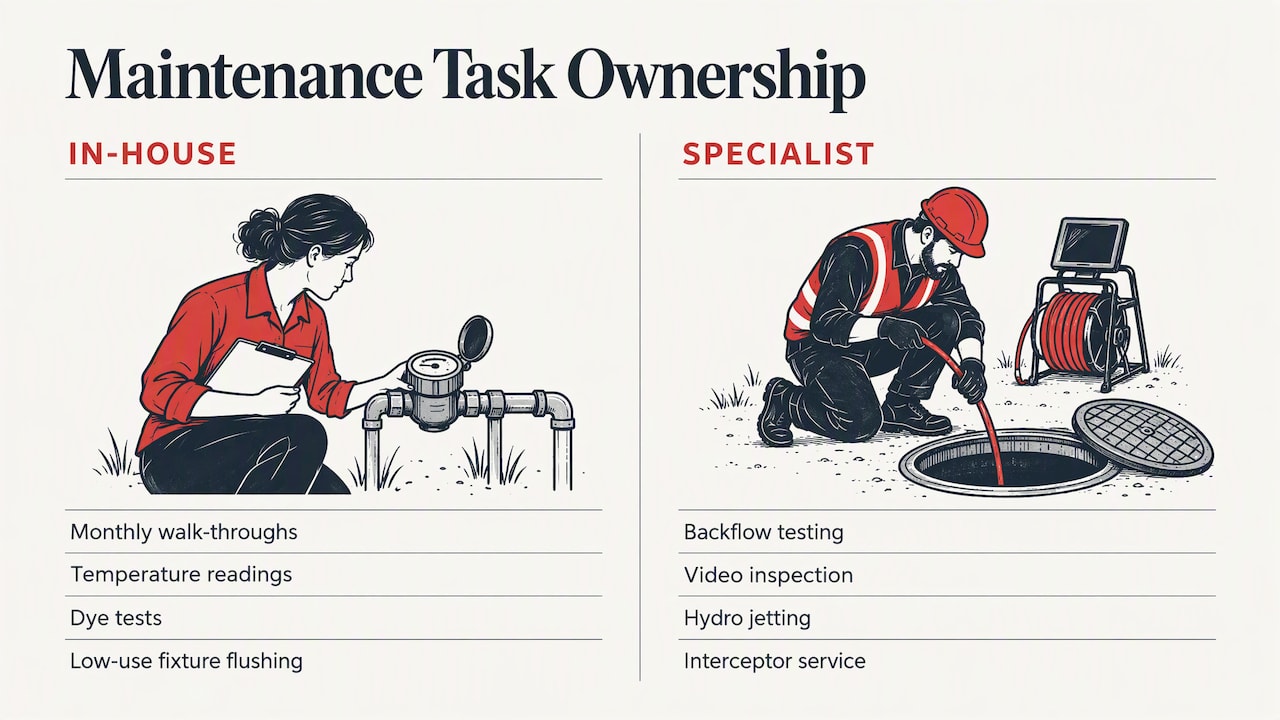
Staff can handle monthly walk-throughs, temperature readings, dye tests, flushing low-use fixtures and meter reads. Hand off anything that needs certification, special equipment or digging: backflow testing, video inspection, hydro jetting, interceptor service, water main work and any repair that touches the underground. Pressure testing is another example. Facility standards such as those at UC Davis Health say to test only new piping and not to apply high-pressure tests to existing service valves or meters without approval, which is the kind of detail a trained plumber already knows.
How PipeX supports commercial maintenance
We handle commercial plumbing for Denver businesses, property managers, developers and municipal departments, including grease trap installation and cleaning, parking garage storm drain repair, backflow prevention, fire line and hydrant service, vaults and meter pits, and site restoration. For underground work, we manage the whole project, from permits through cleanup, so you deal with one contractor instead of three.
If you want a maintenance plan built around your building, start with our commercial plumbing services page or read about PipeX as a Denver commercial plumbing contractor. If something is already wrong, our 24/7 emergency services team is the number to call.
FAQ
How often should a business have its plumbing inspected?
A monthly in-house walk-through, a quarterly check of pumps and low-use fixtures, and an annual professional review is a sound baseline, following the tiered schedule in the ASHRAE checklist. Add an annual backflow test, and camera the sewer line more often if the building is old or has had backups. Restaurants should also schedule grease interceptor service based on volume.
What is the difference between commercial plumbing maintenance and repair?
Maintenance is planned work that finds problems early: inspecting, testing, flushing, jetting and logging results. Repair is what happens after something fails. A good maintenance program turns many would-be emergency repairs into scheduled, budgeted jobs.
Do Denver businesses need to test their backflow preventers?
Denver Water requires an approved backflow prevention assembly on commercial, industrial, irrigation and fire line services, and testing must be done by a certified tester with reports sent to its Cross-Connection Control office. Confirm the current testing interval for your assembly type with Denver Water or your tester.
How do I know if I have a leak I cannot see?
Turn off everything that uses water, read the meter, wait an hour and read it again. If the meter moved, water is escaping somewhere, often underground or inside a wall. A professional leak search and video inspection can pinpoint the location before it damages the structure.
Can my staff do any of this themselves?
Yes, for routine checks such as temperature readings, toilet dye tests, meter reads and flushing little-used fixtures. Leave backflow testing, camera work, jetting and any digging to licensed professionals.
Sources
- ASHRAE water-quality preventive maintenance checklist
- EPA WaterSense operations and maintenance water waste checklist
- Denver Water cross-connection control and backflow prevention program
- City and County of Denver grease interceptor requirements
- New Mexico facilities maintenance standards
- AWWA/IAPMO manual on safe closure and reopening of building water systems
- UC Davis Health mechanical and plumbing facility standards
Recommended
- Comprehensive Plumbing Services Tailored to Your Needs
- Fall Plumbing Checklist for Denver Homes & Businesses: Catch Sewer and Water Line Problems Before Winter
- Professional Sewer Cleaning in Denver: Keep Your Pipes Clear and Your Property Protected
- Sewer Lines in Denver: Expert Commercial Services for Reliable Wastewater Management