

Residential plumbing services cover the pipes, drains, fixtures and underground lines that bring clean water into your home and carry wastewater out. A licensed residential plumbing contractor handles repairs, replacements, installations and inspections, and a good one explains the problem, gives you a written estimate and pulls the permits the job requires. This guide shows what homeowners typically hire plumbers for, how to vet a contractor, what a service call usually costs and when a problem cannot wait.
TL;DR
- Home plumbing runs on three systems: supply lines, waste lines and vents. Most jobs involve one of them.
- Small fixes such as a faucet washer or a single clog can be DIY. Sewer problems, persistent leaks and major installations call for a licensed pro.
- A service-call fee typically runs $50 to $300, and emergency or after-hours calls can cost more. Get the estimate in writing.
- Before work starts, check the contractor’s license, ask about permits and compare written estimates.
- Burst pipes and sewage backups are emergencies. Shut off the water and call right away.
Table of Contents
- What residential plumbing services actually include
- DIY fix or professional call?
- When a plumbing problem is an emergency
- What a plumbing service call costs
- How to choose a residential plumbing contractor
- Permits, codes and what homeowners can do themselves
- Home plumbing maintenance that prevents costly repairs
- The underground side of residential plumbing
- Perspective
- Hire a Denver plumbing team that handles it all
- Frequently asked questions
- Sources
What residential plumbing services actually include
Plumbing in a house comes down to three systems. Water-supply lines, waste lines and vent systems work together to deliver clean water and remove wastewater. When someone calls about a “plumbing problem,” it is almost always a failure in one of those three: a leaking or corroded supply line, a blocked or cracked drain, or a venting issue that makes drains gurgle and slow down.
Homeowners most often hire a plumber for major installations and renovations, persistent or complex problems, sewer-line issues and water-heater replacement. A fuller list of what a residential contractor may offer looks like this:
- Leak and burst-pipe repair inside walls, under slabs and along the service line to the street.
- Drain cleaning and hydro jetting for slow drains, repeat clogs and grease or root buildup.
- Sewer line repair and replacement, including trenchless methods that avoid digging up the whole yard.
- Water line repair and replacement between the meter and the house.
- Video inspection to see inside a pipe before anyone cuts or digs.
- Fixture and appliance work: faucets, toilets, water heaters, garbage disposals, washing-machine hookups.
- Remodel plumbing: kitchen and bathroom rough-ins, whole-home repiping, sump pumps and backflow preventers.
- Seasonal work such as winterization, plus gas-line work, which requires its own specialized licensing.
The second half of that list, from repiping to sump pumps and gas lines, is the work that most clearly separates a licensed contractor from a handyman.
DIY fix or professional call?
Not every drip needs a truck. A running toilet, a new showerhead, a worn faucet washer or a single clogged drain is reasonable territory for a capable homeowner. The line is drawn at persistent problems, complex ones, anything involving the sewer line and major installations.
A practical way to decide:
- Is the problem in one fixture or in several? One slow sink is a local clog. Slow sinks, tubs and a gurgling toilet together point to the main line.
- Has it come back? A drain that clogs again within weeks has a cause a plunger will not reach.
- Is the pipe buried or inside a wall? If you cannot see it, a camera should look at it before anyone digs.
- Does the fix change piping or fixtures? That is often where permits begin, which we cover below.
Guessing is expensive. Replacing a section of pipe that was never the problem costs more than a diagnostic visit, which is why a video inspection is often the first step on anything underground.
When a plumbing problem is an emergency
Some problems cannot wait for a Monday appointment:
- A burst or leaking pipe that is actively flooding a room, basement or crawlspace
- Sewage backing up into tubs, floor drains or toilets
- No water at all to the house, or a suspected water-main break
- A failed water heater leaking onto the floor
- The smell of sewer gas that does not clear
While you wait for help, find your main shut-off valve and close it before the water spreads. Know where it is before you need it. The EPA notes that automatic or remote shut-off capability can limit damage from catastrophic leaks such as failed water heaters, burst pipes and washing-machine hose failures, and that in-line devices installed at the point where water enters the home may require a plumber. For a gas smell, leave the house and call your gas utility or 911 instead of a plumber.
In Denver, cold snaps are the repeat offender. Pipes in exterior walls, unheated garages and crawlspaces are the first to freeze and split, and the damage often shows up only when things thaw. If you are in the metro area, our emergency plumbing team is available around the clock.
What a plumbing service call costs
A service-call fee, the charge for the plumber to come out and diagnose, generally runs $50 to $300, and some plumbers waive it if you hire them for a larger project. The same source notes that the fee can depend on the plumber’s level, mileage or number of trips, your location and job complexity. Emergency, middle-of-the-night and holiday calls may cost more.
The call-out fee is only the start. The final price comes from:
| Factor | Why it moves the price |
|---|---|
| Access | A pipe in an open basement ceiling is quicker than one under a slab or a finished lawn. |
| Depth and length | Underground repairs depend on how much line is affected and how deep it sits. |
| Method | Trenchless repair and open-trench replacement are priced differently. |
| Materials | Pipe type, fittings, fixtures and any code upgrades required. |
| Permits and inspections | Required for many jobs and part of a complete estimate. |
| Timing | After-hours and emergency work usually carries a premium. |
| Restoration | Landscaping, concrete, asphalt or drywall repair after the work. |
We do not publish flat prices for our services, because a fair number for an underground repair depends on what the camera finds. What you should expect from any contractor is a written estimate that spells out the scope, materials, permits, restoration and payment terms before work begins.
How to choose a residential plumbing contractor
The fastest way to a bad experience is hiring on price alone from a phone book of strangers. Before anyone touches your pipes, run through this list.
Verify the license and insurance
Plumbing licensing is set by each state, so the rules depend on where you live. In Colorado, you can search the state’s license lookup for license types including master plumber, residential plumber, journeyman plumber and plumbing contractor. Ask for the license number, check that it is current and ask for proof of liability insurance. Regulators in other states publish similar guidance. Texas, for example, tells consumers to verify the responsible master plumber’s license and insurance, check complaint history, and confirm permit and inspection requirements.
Get more than one written estimate
The same Texas guidance recommends obtaining several written estimates and warranties detailed enough that you understand both the work and the payment. Compare scope, not just totals. A low bid that leaves out permits, backfill or surface restoration is not low.
Ask who pulls the permit
A reputable contractor handles permits and inspections as part of the job, and tells you which inspections will happen. If a contractor suggests skipping the permit to save money, that is your cue to look elsewhere. Unpermitted work can create trouble when you sell the house or file an insurance claim.
Check references and communication
Ask for recent local references and see how the company communicates before the job. Do they show up when they say they will? Do they explain what the camera found? Clear communication before the work usually predicts clean communication during it.
Permits, codes and what homeowners can do themselves
Rules vary by state and often by city, so treat anything you read about permits as a starting point and confirm with your local building department.
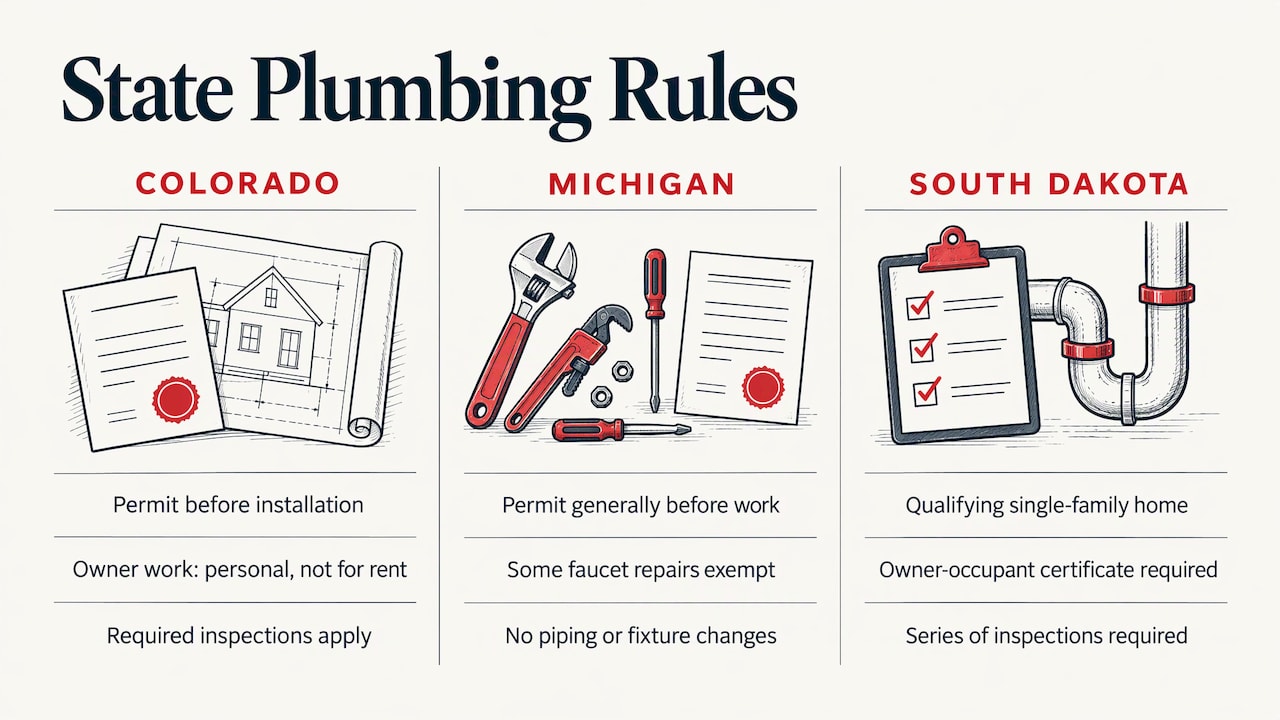
In Colorado, a valid state plumbing permit must be obtained before installing plumbing. Homeowners may do their own work only under stated conditions: they perform the work personally, the property is not for sale, resale or rent, and required inspections take place. The state identifies the International Plumbing Code, International Residential Code and International Fuel Gas Code as the adopted codes for plumbing installations in state-inspected areas. Cities such as Denver run their own permit and inspection offices, so ask your contractor which applies at your address.
Other states draw the lines differently. Michigan’s regulator says plumbing work generally must not begin until a permit is issued, though repairs limited to faucet or valve working parts and clearing stoppages may be exempt if existing piping or fixtures are not altered. South Dakota allows an owner-occupant to install plumbing in a qualifying single-family home with a homeowner installation certificate and a series of inspections. The lesson is the same everywhere: a minor repair may be exempt, but changing piping or fixtures can trigger a permit.
Home plumbing maintenance that prevents costly repairs
Most expensive plumbing calls start as small, quiet problems. The EPA’s WaterSense program suggests a simple routine, in its home maintenance guidance:
- Check fixtures and appliances for leaks.
- Compare your water bill with the same month of the prior year.
- Check your water meter when no water is being used. If it moves, something is leaking.
- Consider leak alerts or a flow-monitoring system.
- Check installed systems annually.
The EPA’s leak-detection guide says undetected household leaks can waste thousands of gallons a year and can stem from old piping, worn fixtures, corrosion, cold temperatures, irregular pressure, equipment failure or incorrect installation. Early alerts can cut utility costs and prevent extensive damage.
A few habits that matter in a Colorado house:
- Insulate or heat exposed pipes before the first hard freeze.
- Keep grease, wipes and “flushable” products out of drains.
- Have a camera look at an older sewer line before it fails, especially if mature trees sit near it.
- Learn where your main shut-off is and make sure every adult in the house does too.
For the basics of how these systems fit together and how contractors work on them, how residential plumbers work is a good starting point.
The underground side of residential plumbing
Most homeowners think about faucets and water heaters. The costlier surprises are usually underground: the water line from the meter to the house and the sewer line running to the main.
Water lines. Older lines corrode, shift with the soil and eventually leak or break. Signs include low pressure, a wet patch in the yard, discolored water or a water bill that climbs without explanation. Our water line repair and replacement work covers leaks, breaks and aging pipes.
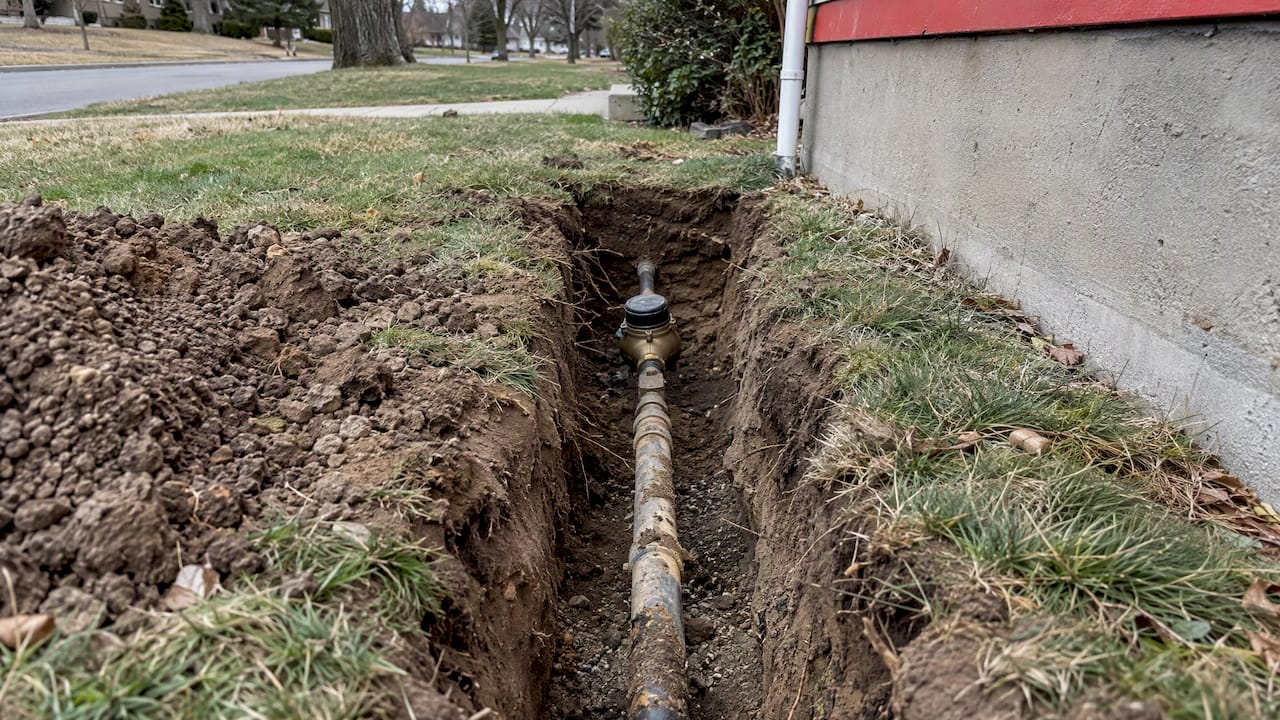
Sewer lines. Roots, bellied pipe, cracks and grease cause repeat backups. Whether to repair a section or replace the line depends on what the camera shows. We lay out the tradeoffs in our guide to sewer line repair vs. replacement in Denver. Where conditions allow, trenchless sewer repair avoids the old way of cutting a trench across the lawn.
Inspection first. A video inspection shows the condition and location of the problem, so the repair scope matches the real issue.
Perspective
Most of the plumbing calls we see could have been smaller. A slow drain gets ignored for a season, a damp spot in the yard becomes a washed-out water line, and a small root intrusion turns into a collapsed sewer pipe in January.
Our view is simple: look first, then decide. A camera inspection costs far less than digging in the wrong place, and it gives you something concrete to compare when you collect estimates. We would rather show you the footage and let you see the problem than ask you to take our word for it.
The other thing we push for is a single point of responsibility. Plumbing and excavation jobs fail at the handoffs: one company diagnoses, another digs, a third pours concrete, and nobody owns the permit. We handle the work from permits to cleanup, so the person who explains the problem is the one accountable for the finished yard, driveway or floor.
Denver adds its own wrinkles, from freeze-thaw cycles to older neighborhoods with aging lines. Our approach is built around those conditions, with same-day service where we can and clear communication at every step.
Scott
Hire a Denver plumbing team that handles it all
If you are a Denver-area homeowner with a leak, a recurring clog or an aging sewer or water line, we can help. PipeX offers emergency plumbing, drain cleaning and hydro jetting, sewer and water line repair and replacement, video inspection and full project management from permitting to cleanup. Explore our plumbing services or request help through our emergency services page when it cannot wait.

Bringing us in early lets us inspect the line, explain your options and give you a written scope you can compare with any other estimate.
Frequently asked questions
What does a residential plumbing contractor do?
A residential plumbing contractor installs, repairs and maintains the supply, drain and vent systems in a home. That ranges from leaking pipes, clogged drains and water heaters to sewer and water line replacement and remodel plumbing. A licensed contractor also handles permits and inspections where the job requires them.
How much is a typical plumber service call?
Service-call fees generally fall between $50 and $300, depending on the plumber, mileage, location and job complexity. Emergency, overnight and holiday calls can cost more, and some plumbers waive the fee if you hire them for the repair. Ask for the fee up front when you book.
Do I need a permit for home plumbing work?
Often, yes. In Colorado, a state or local plumbing permit is required before installing plumbing, and homeowners doing their own work must meet specific conditions and pass inspections. Rules differ by state and city, so confirm with your local building department or ask your contractor.
How do I know a plumber is licensed?
Ask for the license number and look it up with your state licensing board. Colorado residents can use the state’s online license lookup. Also ask for proof of insurance and a written estimate before work starts.
What should I do first in a plumbing emergency?
Shut off the water at your main valve to stop the flooding, then call a plumber. For sewage backups, avoid using drains until help arrives. If you smell gas, leave the home and call your gas utility or 911.
Sources
- Everything You Need to Know About Plumbing, This Old House
- Plumbing Services List: What Plumbers Offer
- Cost to Hire a Plumber, Fixr
- Know Your Flow and Curb Water Waste: Leak Detection Guide, EPA
- Home Maintenance, EPA WaterSense
- Colorado Electrical and Plumbing Permit Information
- Colorado Division of Professions and Occupations license lookup
- Consumer Information, Texas State Board of Plumbing Examiners
- Plumbing Permit Information, Michigan LARA
- South Dakota Plumbing Commission: Homeowner Plumbing