
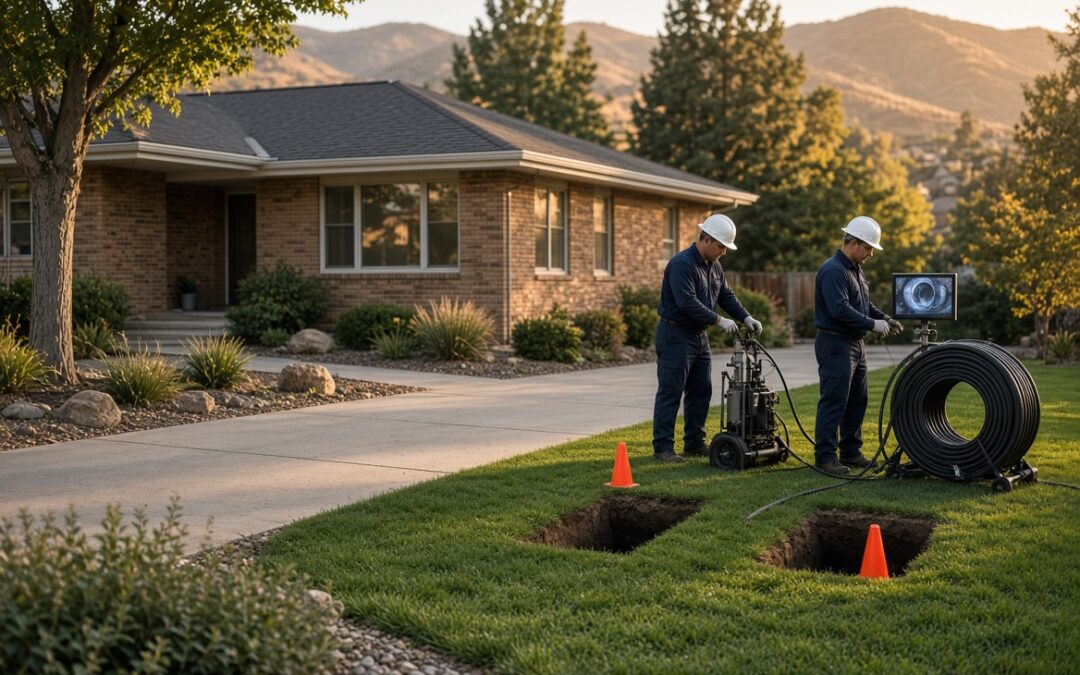
Denver homeowners and property managers know the dread that comes with a failing sewer line. The old way meant a trench across the lawn, a torn-up driveway, weeks of disruption, and a landscape bill that rivaled the plumbing work itself. That is no longer the only option.
Trenchless sewer repair lets PipeX replace or rehabilitate underground lines through small access points instead of a continuous open trench. For many Denver, Aurora, Centennial, and Parker properties — especially older homes with mature landscaping and tight urban lots — it is the cleaner, faster path to a reliable sewer system.
At PipeX, we have spent more than 20 years solving underground infrastructure problems across the Denver metro area. When trenchless methods fit the job, we use them. When they do not, we say so. Either way, you get an honest plan from licensed, insured professionals who handle the work from inspection through final restore.
Why Denver Sewer Lines Fail So Often
Front Range plumbing takes a beating that milder climates never see. Several local conditions stack up against buried pipe:
- Freeze-thaw cycles. Water in soil expands and contracts through winter, stressing joints, shifting pipe, and opening hairline cracks that roots and groundwater exploit.
- Mature trees. Neighborhoods like Washington Park, Park Hill, Highlands, and older parts of Aurora and Centennial have established root systems that hunt moisture in clay and cast-iron sewer lines.
- Aging materials. Many Denver-area homes still rely on original clay tile, Orangeburg, or cast-iron laterals that have already outlived their design life.
- Hard water and scale. Mineral-rich Rocky Mountain water narrows interior diameter over time and makes rough pipe walls even more likely to catch debris.
- Soil movement. Expansive clay common along the Front Range can heave and settle, breaking bells and misaligning joints.
A camera inspection is the only reliable way to know whether a line can be lined, burst, or needs a targeted open-cut repair. Guessing from the surface is how properties end up with the wrong fix.
What Trenchless Sewer Repair Actually Means
“Trenchless” is a family of methods, not a single product. Two approaches cover most residential and light-commercial sewer work PipeX performs in the metro area.
Pipe bursting
Pipe bursting replaces the old line with a new high-density polyethylene (HDPE) pipe. A bursting head is pulled through the existing pipe, fracturing the old material outward while the new pipe follows immediately behind it. Work typically starts from two small pits — one at each end of the run — instead of a trench the length of the yard.
Bursting is the right conversation when the host pipe is collapsed, offset, undersized, or too damaged to hold a liner. It also lets us upsize the line in many cases, which matters on older laterals that were never sized for modern fixtures and occupancy.
Cured-in-place pipe lining (CIPP)
Lining rehabilitates a pipe that is still structurally usable. A resin-saturated liner is inverted or pulled into the existing line, then cured in place so it becomes a smooth, jointless pipe-within-a-pipe. The original pipe stays in the ground and acts as a form.
Lining shines when the line is cracked, leaking at joints, or lightly root-intruded but still round and continuous. It is often the least disruptive option for lines that run under driveways, patios, or finished interiors.
Neither method is magic. Severe collapses, major sags (bellies), or inaccessible cleanouts can still require conventional excavation. A PipeX technician will show you the camera footage and explain which method the pipe can actually support.
Trenchless vs. Traditional Excavation
Cost is job-specific. Trenchless can look higher on the plumbing line and still come out ahead once driveway replacement, sod, fencing, and time off work are counted. We price both paths when both are viable so you can decide with the full picture.
Signs Your Denver Property May Need Sewer Repair
Do not wait for a backup into the house. These are the early warnings we hear most often from homeowners and commercial clients:
- More than one fixture drains slowly at the same time
- Gurgling in a toilet when a nearby sink or tub is used
- Sewage odor in the yard, basement, or near a cleanout
- Lush or unusually green strips of grass over the sewer route
- Indentations or sinkholes in the yard or driveway
- Recurring clogs within weeks of snaking
- Foundation or slab moisture that does not track to a roof or irrigation leak
- A camera inspection that already showed cracks, roots, offset joints, or a belly
If a drain snake “fixed” the same clog last season, the line is telling you the problem is structural. Hydro jetting can clear grease, scale, and roots. It cannot rebuild a broken pipe. That is where trenchless repair or replacement comes in.
How PipeX Handles a Trenchless Project
Turnkey matters on underground work. Permits, locates, access, restore, and municipal coordination are part of the job — not extras you have to chase yourself.
- Video camera inspection. We locate the line, measure condition, and record footage you can see. No repair recommendation without evidence.
- Locate and plan. Utility locates, cleanout access, and a method recommendation — bursting, lining, targeted repair, or open-cut where trenchless will not hold.
- Permitting and scheduling. We handle required permits and coordinate around occupied homes, restaurants, and multi-family buildings.
- Access pits and preparation. Small, controlled excavations at the ends of the run. We use floor and landscape protection wherever we work near finished surfaces.
- Burst or line. The existing pipe is replaced or rehabilitated according to the approved plan.
- Verification. Post-work camera inspection confirms a continuous, free-flowing line before we close up.
- Restore and walkthrough. Pits are backfilled, the site is left clean, and you get a clear summary of what was done.
Residential, Commercial, and Municipal Applications
Homes. Most single-family trenchless jobs in Denver involve the lateral from the house to the city main. Homeowners choose trenchless to protect mature trees, stamped concrete, xeriscape, and the short construction window Colorado weather allows. Preventive lining after a camera inspection is also common on mid-century homes before a sale or refinance.
Commercial properties. Restaurants, multi-family buildings, medical offices, and retail centers cannot afford a parking lot or kitchen shut down for a week-long trench. Trenchless methods keep grease-bearing lines and building laterals in service with far less downtime. Pairing repair with scheduled hydro jetting is how commercial clients stay off the emergency list.
Municipal and site work. PipeX also supports developers and public-sector clients with underground utilities, fire lines, and water and sewer infrastructure. When a project needs both trenchless rehabilitation and conventional excavation, we staff it as one coordinated scope instead of handing you two contractors.
Why Late Summer and Early Fall Are Smart Times to Act
Late August through October is one of the better windows on the Front Range for underground work. Soil is workable, crews are not fighting frozen ground, and you still have time to correct a failing line before winter freeze-thaw opens every weak joint. Tree roots are also still active, which means a camera inspection now will show the true condition of the pipe — not a quiet winter snapshot.
If you already know you have slow drains, a past backup, or an older clay lateral, scheduling inspection before the first hard freeze is the cheapest insurance available.
Why Choose PipeX for Trenchless Sewer Repair in Denver
- More than 20 years serving Colorado, with local knowledge of Denver soils, older laterals, and metro permitting
- Licensed and insured, with state-certified master plumbers on staff
- True 24/7 emergency response for backups, breaks, and urgent leaks
- Camera diagnostics before any recommendation — no scare tactics, no mystery invoices
- Trenchless and conventional excavation under one roof, so the method fits the pipe instead of the other way around
- Turnkey project management from locates and permits through final restore
- Service throughout Denver, Aurora, Centennial, Parker, Greenwood Village, and surrounding communities
Ready to See What Is Actually Happening Underground?
A failing sewer line does not improve with another bottle of chemical cleaner or another snaking. If drains are slowing, odors are showing up, or a previous repair did not last, get a camera inspection and a clear recommendation.
Call PipeX today at 303-572-3478 or contact us online to schedule trenchless sewer repair or a diagnostic inspection in Denver, Aurora, Centennial, or Parker. We are available 24/7 for emergencies.
Frequently Asked Questions About Trenchless Sewer Repair in Denver
Q: Is every sewer line a candidate for trenchless repair?
A: No. Lining needs a pipe that is still continuous enough to host the liner. Bursting needs a path the bursting head can follow and room for access pits. Severe collapses, large sags, or unknown utility conflicts can require open-cut work on part or all of the run. Camera inspection is how we find out.
Q: How long does trenchless sewer repair take?
A: Many residential laterals are completed in one to two days once permits and locates are in place. Complex commercial or municipal runs take longer. We give a schedule with the proposal so you can plan occupancy and access.
Q: Will trenchless work damage my landscaping or driveway?
A: Far less than a full trench. You should still expect small access pits at the ends of the repaired section. Driveways, patios, and lawns between those points are typically left intact. We protect finished surfaces and restore the pits when the line is verified.
Q: How long does a lined or burst sewer line last?
A: Modern HDPE replacement pipe and properly installed CIPP liners are designed for decades of service. Actual life depends on use, soil, and whether grease, roots, and debris are managed with periodic cleaning. We will tell you what maintenance the finished line needs.
Q: Do I need a permit for sewer repair in Denver?
A: Most sewer replacements and many rehabilitations require a permit from the city or county. PipeX handles permitting for work we perform and coordinates inspections so the job closes correctly.
Q: What if I only have a clog, not a broken pipe?
A: Then you may need professional sewer cleaning or hydro jetting, not a replacement. We inspect first. If the pipe is intact, we clear it. If the pipe is failing, we will show you the footage and discuss trenchless or conventional repair.
Q: Do you offer emergency sewer service?
A: Yes. PipeX provides 24/7 emergency plumbing and sewer response across the Denver metro area for backups, breaks, and urgent leaks. Call 303-572-3478.
Q: Which cities do you serve?
A: Denver, Aurora, Centennial, Parker, Greenwood Village, and surrounding Front Range communities. If you are unsure whether you fall in our service area, call and ask.