

A leaking fire hydrant is a repair job for whoever owns it, and the first step is working out who that is. A public hydrant on a street belongs to the water utility, so you report it and leave it alone. A private hydrant on a commercial site, campus, development or HOA property belongs to the property owner, who needs a licensed contractor to repair it. In Denver, PipeX handles fire line and fire hydrant services, from permits to cleanup, with 24/7 emergency response. You can reach us through our emergency services page.
Key Takeaways
- Never open, close or try to repair a hydrant yourself. Only authorized utility personnel should operate one.
- Public hydrant: report it to the water utility. Private hydrant: the owner is responsible, and speed matters.
- A small leak is not harmless. It can erode soil, speed up corrosion and, in cold weather, freeze a hydrant so it is useless in a fire.
- Most hydrants are built to last about 50 years, so a leak on an older unit often points to worn seals or valves that need professional repair.
- Property owners with a private hydrant or fire line can call PipeX for repair, replacement and site restoration.
Table of Contents
- How to tell a leak from normal behavior
- Why a small leak is worth fixing
- Who to call for a leaking hydrant
- What to do while you wait
- How long hydrants last and what shortens their life
- What professional hydrant repair involves
- Fire hydrant and fire line service from PipeX
- Our view on hydrant leaks
- FAQ
- Sources
How to tell a leak from normal behavior
Some hydrants are reported for one of three reasons: water is running or dripping from the barrel, outlets or cap, a vehicle or storm has damaged the hydrant, or the area around it is washing out. Cities that take hydrant reports, such as NYC311, list leaking or running, damaged or missing, a missing valve box cover and a damaged protective post as reportable conditions.
Signs worth acting on:
- Water pooling or flowing around the base, or a wet, soft patch of lawn or pavement near it.
- Water dripping from the outlet caps or the bonnet at the top.
- A constant trickle after rain has stopped.
- Ice building up around the hydrant in winter.
- A hydrant that leans, has been struck, or is missing a cap.
- A vibrating, “jumpy” sound. Chicago crews link it to a decayed seal.
A dry barrel hydrant is designed to drain after use, and a little water at the drain is not always a problem. But a barrel that holds water or ice points to a faulty drain or a leaky valve. That is according to a University of Colorado Boulder review of the NFPA 25 inspection rules. The same review lists leaks at the outlets or top of the hydrant, cracks in the barrel and worn outlet threads as conditions that call for corrective action.
If you can’t tell whether it is normal, report it. A hydrant is safety equipment, and a quick look from the right crew costs less than a failure during a fire.
Why a small leak is worth fixing
A slow drip does not look urgent. It is still doing damage.
Soil, corrosion and groundwater. According to The Municipal’s hydrant maintenance guide, a leaking hydrant can erode soil where drainage is poor, speed up corrosion of the hydrant and its joints, and contaminate groundwater.
Frozen, useless hydrants. Standing water in a barrel in a cold climate can freeze and damage the hydrant, as Mueller Water Products notes. Denver winters make this a real concern. A hydrant that is frozen when the fire department needs it is the worst outcome.
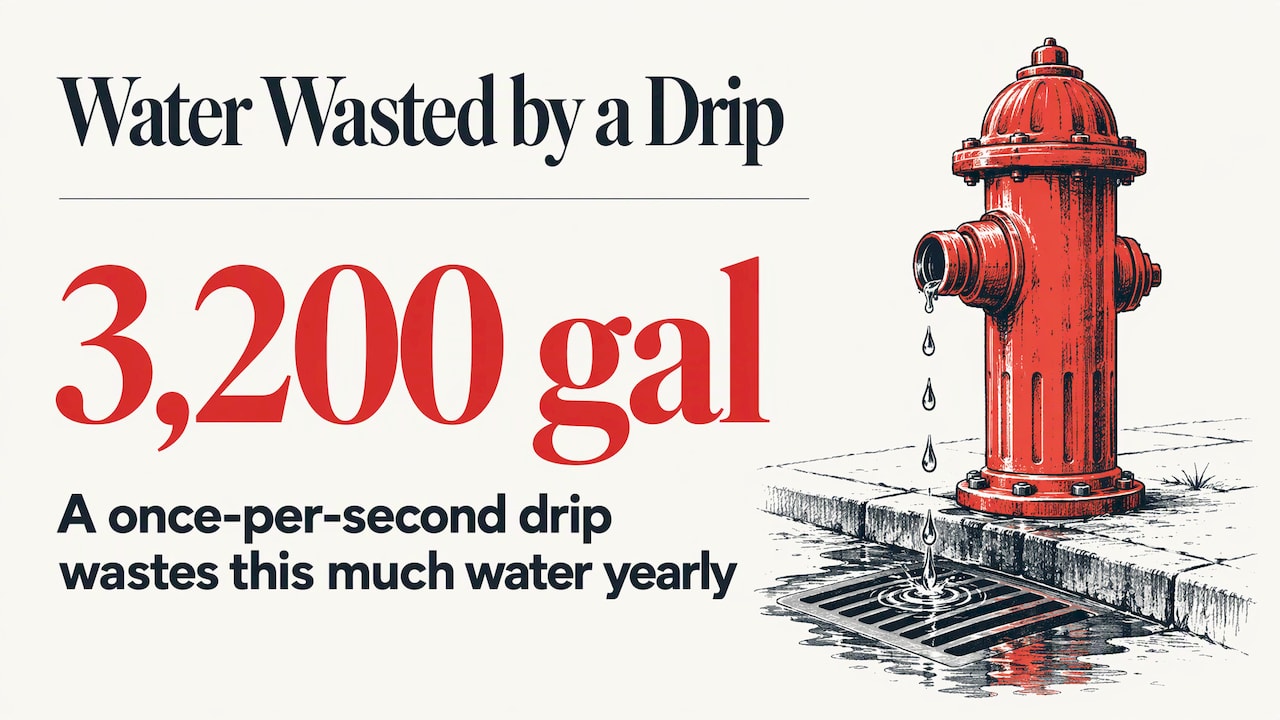
Wasted water. The EPA figures cited in a 2016 release put a drip once per second at about 3,200 gallons a year. Hydrant leaks often go unnoticed because the water escapes underground through the drain valve.
Pressure and service. Leaks and unauthorized use can lower water pressure or damage a hydrant to the point that it cannot be used. They can also contribute to main breaks that interrupt service to nearby customers.
Damage from impact is the dramatic version. In November 2026, a crash in Los Angeles sheared off a hydrant, and the geyser lifted an SUV and took nearly two hours to shut off. That is why a damaged hydrant should be reported at once.
Who to call for a leaking hydrant
The right call depends on who owns the hydrant.
Public hydrants
Hydrants on public streets belong to the water utility or city. The usual path is to call the utility or your city’s 311 line. Alexandria, Virginia sends residents to its 311 system and says to call 911 if a damaged hydrant creates an emergency. In Denver, start with the water utility or the city’s non-emergency line, and call 911 if water is gushing or someone is at risk.
When you report, have this ready:
- The street address or nearest intersection, and the hydrant number if visible.
- What you see: dripping, running, leaning, struck by a vehicle.
- Whether water is flowing right now.
- A photo if you can take one safely.
EBMUD asks for exactly this, a photo, address and hydrant number. It also says that when the party who damaged a hydrant is known, that party pays for the repair.
Private hydrants
If the hydrant sits on your property and connects to your own fire line, it is yours to maintain. That covers commercial buildings, industrial sites, apartment complexes, campuses and developments. Some cities set tight deadlines. Bellevue, Washington, for instance, requires private hydrant owners to notify the fire department within 48 hours of noticing a problem and to mark inoperable hydrants out of service. Check your local fire marshal’s rules, and see our guide to fire line and hydrant services for what we cover.
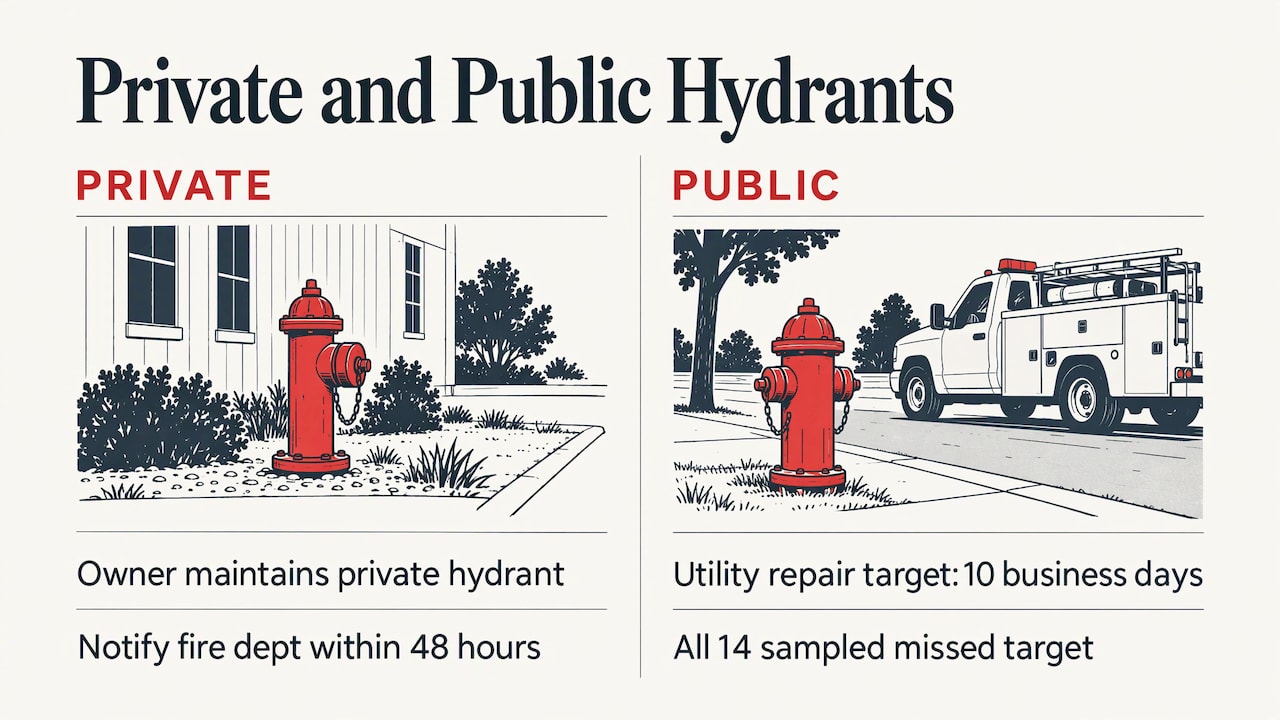
Responsibility matters because public repairs can stall. A City of Dallas audit found that all 14 sampled hydrants waiting for repair had missed the utility’s ten-business-day target. Waiting on a slow process is not an option for a private hydrant, because the owner carries the risk.
What to do while you wait
- Do not operate, tighten or try to fix the hydrant. Leave that to authorized personnel.
- Keep people, cars and equipment clear if water is spraying forcefully.
- If spraying creates an immediate hazard, call emergency services or the utility.
- Keep the area around the hydrant free of vehicles, snow and debris so crews can reach it.
- If the hydrant is private and out of service, mark it clearly and tell your fire department.
- If water is reaching a building, a basement or a parking structure, see our guide on plumbing water damage and who to call.
How does a hydrant leak differ from a leaking water line? Often the source is not the hydrant itself but the connecting line underground. If a wet spot keeps returning, water line leak detection helps trace it.
How long hydrants last and what shortens their life
WaterWorld puts the average hydrant lifespan at about 50 years. It cites a failure rate of roughly 18% in emergencies for hydrants over 50, against 12% for those aged 30 to 40. A West Virginia Public Service Commission report found that the most common cause of hydrant failure is a lack of regular inspection, testing and preventive maintenance.
For owners, that means a leak is a prompt to inspect, not just to patch. Per the Boulder review of NFPA 25, dry barrel hydrants should be inspected annually and after each operation.
What professional hydrant repair involves
A private hydrant leak can come from a worn seal, a failed valve, a cracked barrel, or the buried line that feeds it. Finding which one is the first job. Repairs can then range from replacing a component to digging down and replacing the hydrant or the line beneath it. Digging means permits, utility locates, traffic or access plans and restoring pavement or landscaping afterward.
That is where a turnkey contractor helps. We handle the job from permits to cleanup, so you deal with one team rather than coordinating an excavator, a plumber, a paving crew and an inspector separately. Our video inspection work can look inside lines, and our water main and fire line repair covers the pipe that feeds the hydrant.
Fire hydrant and fire line service from PipeX
PipeX serves residential, commercial and municipal clients in Denver with fire line and fire hydrant servicing, water main and fire line repair, excavation, site restoration and 24/7 emergency service. If you manage a building, a campus or a development with a private hydrant, you can see our fire line and hydrant services or call for emergency help right away.

For a leak that cannot wait, use our emergency services. For a planned repair or replacement, we can scope the work, handle permits and restore the site once it is done.
Our view on hydrant leaks
Most hydrant problems we hear about started small. A weep at the base in October becomes a frozen barrel in January, and the person who owns the hydrant finds out when the fire department does.
Our approach is to treat the hydrant and the line that feeds it as one system. That means finding the real source first, then repairing it with the permits, excavation and restoration handled together. Denver’s freeze and thaw cycles are hard on buried pipe, and we plan around them.
If you own a private hydrant, do not wait for a public agency to solve it for you. Call us early, and we will get it working and the site back in order.
Scott
FAQ
Is it normal for a fire hydrant to drip?
Not as a rule. A dry barrel hydrant should drain after use, but steady dripping, pooling water or ice around the base usually means worn seals or a leaking valve. Report it so someone can check it.
Who do I call about a leaking fire hydrant?
For a public hydrant, call the water utility or your city’s non-emergency line, and 911 if there is an immediate hazard. For a private hydrant on your property, call a licensed contractor such as PipeX, and notify your fire department as local rules require.
What happens if a fire hydrant is left leaking?
The leak can erode soil, speed up corrosion and waste water. In winter the barrel can freeze and leave the hydrant unusable during a fire. Leaks can also reduce pressure in the surrounding system.
Can I fix a leaking hydrant myself?
No. Hydrants are operated only by authorized personnel, and a private hydrant repair involves pressurized lines, excavation and permits. Our team handles these jobs for Denver property owners.
Sources
- Fire Hydrant Complaint, NYC311
- Napa Service Center hydrant guidance
- University of Colorado Boulder, code review for hydrant inspection
- Spend a morning with a crew fixing one of Chicago’s hydrants
- Best practices for hydrant maintenance, The Municipal
- Best practices for hydrant maintenance, Mueller Water Products
- Fire hydrant leak inspections and water conservation
- Fire Hydrant Safety, Camden County, NJ
- Hydrant geyser after crash, KABC/CNN Newsource
- Sewer and Hydrant Maintenance, City of Alexandria, VA
- EBMUD fire agency FAQ
- City of Bellevue fire hydrant guidance
- City of Dallas audit of hydrant inspection and maintenance
- Hydrants: Repair or replace, WaterWorld
- Public Service Commission of West Virginia hydrant report