

Yes, a sewer line can be repaired in a Denver winter. Cold weather changes how the work is planned, but it does not have to mean waiting for spring. The line that serves your building is your responsibility, and the repair needs a city permit and a utility locate before anyone digs. PipeX is a Denver plumbing and excavation company that handles the whole job, from permits to cleanup, with 24/7 emergency service. If sewage is backing up right now, contact our emergency team.
Key Takeaways
- Denver treats the private sewer line, from your building to the tap at the city main, as the owner’s responsibility. The city maintains only the public main.
- A backup that shows up at several fixtures at once points to the main line, not a single clogged drain.
- Denver requires a Sewer Inspection Permit before any building sewer repair or replacement, and a Colorado 811 locate before digging.
- Winter does not have to delay the repair. Camera inspection, hydro jetting, trenchless methods and excavation are all used on Denver lines, and PipeX manages permits and cleanup.
- If water is backing up now, stop using water in the building and call for help the same day.
Table of Contents
- Who is responsible for a sewer line in Denver
- Signs the problem is the sewer line, not a drain
- What to do the moment a line backs up
- Permits and locates: the part that surprises owners
- Repair methods in winter: trenchless or excavation
- What it costs and what shapes the quote
- Choosing a contractor you can rely on
- Before the next freeze
- Our approach to winter sewer work
- Get a Denver sewer line fixed with one team
- FAQ
- Sources
Who is responsible for a sewer line in Denver
Before you call anyone, know which pipe is yours. Denver’s wastewater rules say the building sewer is owned and installed at the owner’s expense. They also say maintenance of privately owned piping, on public or private property, is the owner’s exclusive responsibility. The city operates only the public mains it owns.
The city’s own FAQ puts it plainly: for a private service line problem, Denver recommends hiring a licensed plumbing company. It also asks that sewer backups be reported right away at (303) 446-3400, and a maintenance crew is dispatched to find out whether the fault sits in the city main or on your side.
For homeowners, that means the repair bill is yours. For property managers and businesses, it means a failed lateral can shut a building down until it is fixed.
Signs the problem is the sewer line, not a drain
A single slow sink is usually a local clog. A sewer line problem looks different:
- Several fixtures slow down or gurgle at once, especially the lowest ones, such as a basement floor drain or shower.
- Flushing a toilet makes water rise in another fixture.
- Sewer odors in the basement or yard.
- Wet or sunken ground along the line’s path.
- Drains that clear with a snake and clog again within weeks.
Winter adds its own pressure. Grease and debris that cling to pipe walls are harder to flush when the water is cold, and tree roots keep working on any joint that has already opened. Ground that freezes and thaws repeatedly can also shift pipes and open joints on older lines. The result is the same: a line that handled fall without complaint backs up in January.
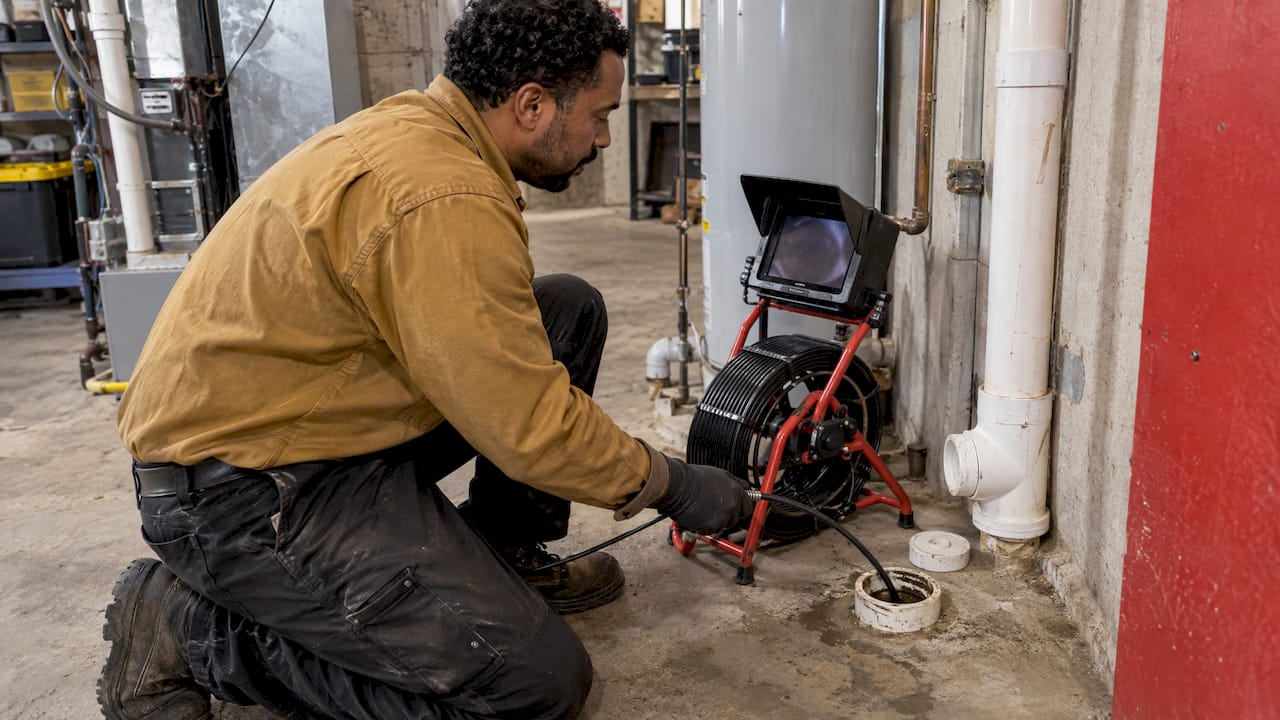
If these signs appear, the next step is a camera inspection. A video camera run through the line shows the cracks, offset joints, roots or low spots, so the repair is chosen from what is actually there. Our guide to what a sewer camera inspection reveals explains what the footage shows.
What to do the moment a line backs up
Sewage in a building is a health and property problem, so act in this order.
- Stop using water. No flushing, laundry or dishwasher. Every gallon you add has nowhere to go.
- Keep people and pets out of the affected area. Backup water carries waste.
- Call for emergency plumbing. PipeX runs 24/7 emergency service, so a midnight backup does not have to wait for morning. Our emergency services page is the place to start.
- Report it to the city if you suspect the main. The city number above sends a crew to check whether the fault is public or private.
- Photograph the damage for your records and any insurance conversation.
Do not pour chemical drain openers into a line that is already backing up. They sit in the pipe and are a hazard to whoever opens it next.
Permits and locates: the part that surprises owners
Denver does not let a building sewer be repaired or replaced on a handshake. Its sewer rules list a Sewer Repair Permit and a Sewer Inspection Permit among the permits issued by Wastewater Management. They state that no repair or replacement of a building sewer is allowed before a Sewer Inspection Permit is issued. Inspection notice must be given at least 24 hours ahead, and a permit becomes void if work does not start within one year of issuance.
Then there is the locate. Colorado 811 must be contacted at least three working days before digging. The city locates only its main lines, so the service line is the owner’s to identify. Emergency locates are available around the clock by calling 811.
In winter these steps matter more, not less. A job that starts without its permit or locate can be stopped mid-excavation, with an open trench in freezing weather. Handling permits to cleanup is how PipeX runs a project, so the paperwork is scheduled alongside the crew instead of discovered after the dig has begun.
Repair methods in winter: trenchless or excavation
Two families of repair cover most Denver sewer jobs.
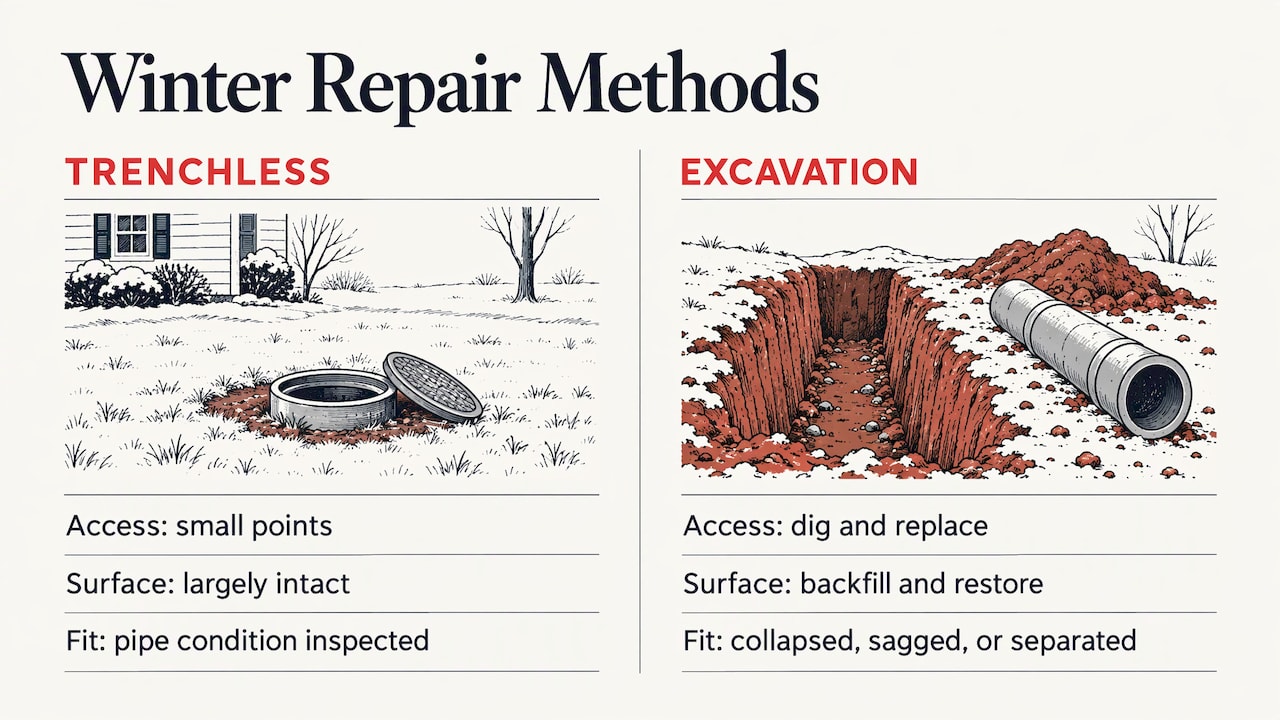
Trenchless repair works through small access points instead of a continuous trench. It leaves the lawn, driveway and landscaping largely intact, which is a real advantage when the ground is hard. Whether it fits depends on the condition of the pipe, and that is what the camera inspection settles. Our page on trenchless sewer repair in Denver covers how it works.
Excavation is still the answer when a pipe has collapsed, sagged or separated beyond what lining can fix. PipeX is an excavation contractor as well as a plumber, so the same company can dig, replace the line, backfill and restore the surface. You do not have to coordinate a plumber, an excavator and a paving crew separately.
Sometimes the answer is smaller than either. A line clogged by grease or roots may need hydro jetting, which uses high-pressure water to scour the pipe wall, followed by a camera pass to confirm what caused the blockage. For help weighing repair against replacement, read our guide to sewer line repair versus replacement in Denver.
What it costs and what shapes the quote
We do not publish fixed prices, because a sewer job depends on what the camera finds. The main factors are:
- The method: cleaning, spot repair, lining or full replacement.
- Pipe depth and length, and how much surface has to be opened.
- What sits above the line: lawn, concrete, asphalt or a structure.
- Access, permits and surface restoration.
- Whether the work is an emergency call or planned.
Because PipeX handles excavation, concrete and asphalt restoration and site cleanup in-house, those items are part of one scope rather than separate bids. Request a quote for your line and you will have the full project in front of you.
Choosing a contractor you can rely on
Whatever company you hire, look for a licensed plumber, a clear written scope, permit handling and a plan for restoring the site. This hiring guide for plumbing and heating contractors lists general points to cover when you compare proposals. For a sewer job in particular, a contractor who can inspect, repair, excavate and restore under one roof removes the handoffs where winter jobs tend to stall.
Before the next freeze
If your line is not failing, winter is still the time to find out how healthy it is. Keep grease, wipes and food scraps out of drains. Pay attention to slow drains and gurgling. Have a camera inspection done on an older home or any line that has needed repeated clearing. Our fall plumbing checklist for Denver homes and businesses walks through the sewer and water line checks worth doing before the cold settles in.
Our approach to winter sewer work
Denver winters make people hesitate. They assume a failed sewer line has to wait for spring, and meanwhile the backup keeps coming. We see it differently: a line that is failing should be inspected and fixed on a schedule that fits the problem, not the calendar.
What makes that possible is having the whole job under one roof. Permits, locates, video inspection, hydro jetting, trenchless repair, excavation, restoration and cleanup are all things PipeX does. When one team owns every step, there is no gap between the plumber and the excavator, and no one waiting on someone else’s schedule.
If you are looking at a sewer problem, a call to us is the quickest way to learn what you are dealing with.
Scott
Get a Denver sewer line fixed with one team
PipeX serves homeowners, businesses, developers and municipal clients across Denver with sewer line repair and replacement, video inspection, hydro jetting, excavation and 24/7 emergency response. Our sewer line repair and replacement page shows what we do, and the PipeX home page has the ways to reach us.

Business owners can also see our commercial plumbing services, and public agencies can see our municipal and industrial services.
FAQ
Who pays for a sewer line repair in Denver?
The property owner pays for the private building sewer. Denver’s rules make maintenance of privately owned piping the owner’s responsibility, while the city maintains the public main. If you are unsure where the fault is, the city’s backup line, (303) 446-3400, can send a crew to check.
Do I need a permit to repair my sewer line?
Yes. Denver does not allow a building sewer to be repaired or replaced before a Sewer Inspection Permit is issued, and a Colorado 811 locate is required before digging. PipeX handles permits as part of the project.
Is a sewer backup an emergency?
Treat it as one. Stop using water and call a plumber the same day. PipeX offers 24/7 emergency service for exactly this situation.
Should I try to clear a sewer backup myself?
A backup across several fixtures usually means the main line is involved, and the cause needs a camera to identify. Calling a professional is the safer course, and it avoids sending more water into a line with nowhere to drain.
Sources
- Wastewater Questions and Answers, City and County of Denver
- Rules and Regulations Governing Sewerage Charges and Fees, Denver DOTI (PWRR-017.2)
- Underground Utility Locate Requests, City and County of Denver
- Plumbing and heating contractors hiring guide