

Water that sits in your yard for days is telling you something: the grade is wrong, the soil can’t absorb it, or a buried pipe is leaking. Each cause needs a different fix, and the wrong one can push the problem onto your foundation or your neighbor’s lot. At PipeX we handle plumbing and excavation together, from permits to cleanup, so the cause gets found and the fix gets built by one Denver crew. If water is already near your home, reach out to our emergency team.
Key Takeaways
- A yard that dries within a day or two after a storm is normal. Puddles lasting several days, or wet ground that never dries, point to a real problem (Northern Virginia Soil and Water Conservation District).
- The usual causes are poor grading, compacted or clay soil, short downspouts, blocked runoff paths and broken water or sewer lines.
- Wet ground that persists in dry weather, or a water meter that keeps moving, suggests a buried line rather than a surface issue.
- Moving water without a proper outlet often moves the problem. Grading, drains and pipe work should be planned as one system.
Table of Contents
- How to Tell Normal Wet From a Drainage Problem
- What Causes Water to Pool in the Yard
- Watch the Water Before You Fix Anything
- Which Fix Matches Which Cause
- When the Problem Is Plumbing, Not Landscaping
- Get the Whole Problem Solved
- FAQ
- Sources
How to Tell Normal Wet From a Drainage Problem
Not every puddle is a defect. The City of Rockville’s homeowner guide says small wet spots that dry within a day or two after heavy rain are common and not usually cause for concern. The concern starts when water lingers.
Watch for these signs:
- Standing water or spongy ground several days after a storm
- Grass that greens unevenly or dies in patches
- Water seeping into the basement or filling window wells
- Topsoil or mulch washing onto paths and driveways
- Mildew, algae or plant growth on pavement or along the side of the house (H2OC stormwater program)
Left alone, these lead to dead plants and trees, mosquitoes, and foundation cracks or shifting, along with mold and damaged belongings, according to the same Rockville guide. For a home or a commercial property, the foundation is where small yard problems become expensive.
What Causes Water to Pool in the Yard
Harrison, N.Y. lists six common causes: improper slope or grading, impacted soil, short gutter downspouts, barriers such as sidewalks and rocks, runoff erosion, and broken water or sewer lines. Here is how they play out.
Grading and settled soil
Soil should slope away from the house. Oklahoma State University Extension notes that settling can flatten that slope and cause ponding right beside the foundation. Settling around foundation walls is common and may not show for years, typically because of poor backfill and compaction during construction, per Illinois Extension.
Compacted or clay soil
University of Maryland Extension says water infiltrating slower than 1 inch per hour is too slow and can indicate compaction, high clay, buried debris, a high water table or a restrictive layer (soil problems guide). Pavement and roofs add to the load by pushing more water downslope.
Roof water and blocked paths
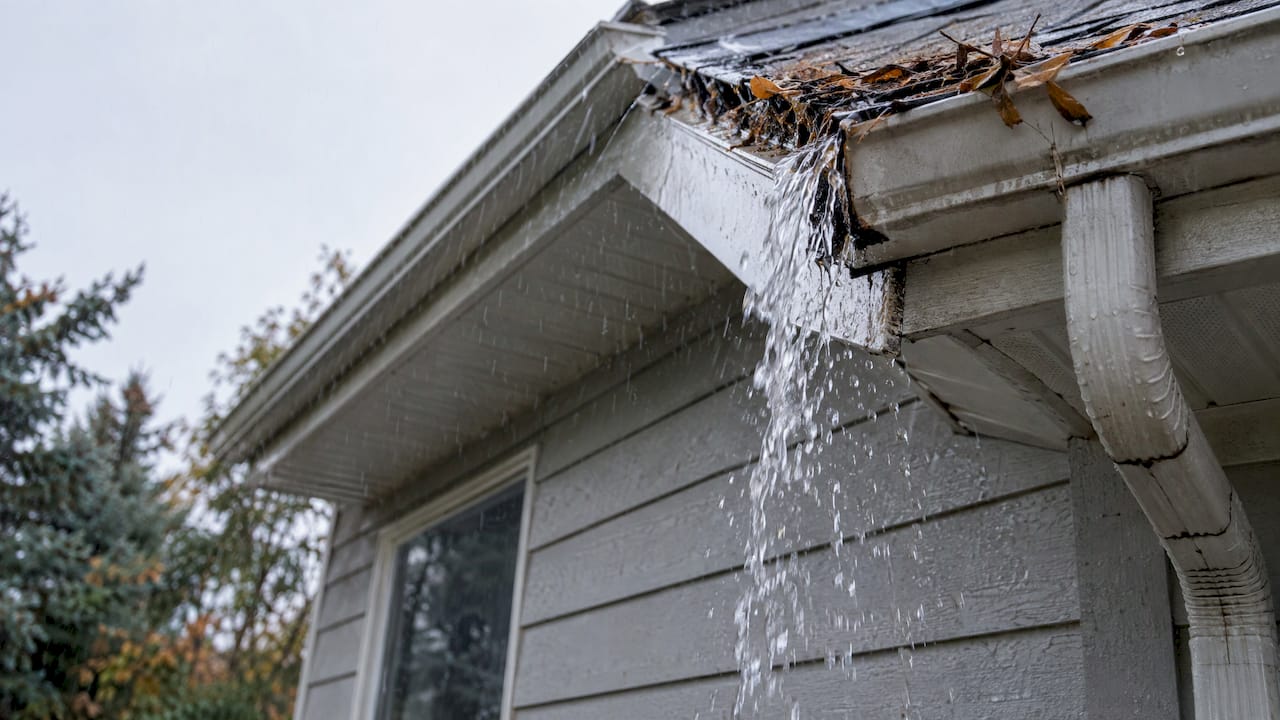
Downspouts that end beside the house dump a roof’s worth of water into one spot. Gutters packed with debris overflow in the same place, so clogged gutters from leaves are worth ruling out early. Rocks, edging and walkways can also block the natural path of runoff.
Pipes underground
This is the cause people miss. The Northern Virginia district says wet areas lasting months or never drying are commonly caused by leaks from damaged water pipes, sprinkler systems or outdoor faucets, or by naturally high groundwater. Prince George’s County’s drainage manual says to suspect a waterline leak if wetness is continuous, sudden, near plumbing lines, or occurs in wet and dry weather alike.
Watch the Water Before You Fix Anything
Rockville’s guide suggests observing during and after rain: where the water comes from, whether it flows in from adjacent properties, where downspouts discharge, and whether pipes or ditches are clogged. Take photos and note how long each spot stays wet. That record shortens any site visit and keeps the diagnosis honest.
Which Fix Matches Which Cause
The options below come from university and municipal guidance. The common thread is that the water needs somewhere safe to go.
| Cause | Typical fix |
|---|---|
| Low spots, flat grade | Regrading so the ground drops about 1 inch per foot away from the house |
| Compacted soil | Aeration and soil improvement |
| Short downspouts | Extensions to a storm drain or safe discharge area |
| Concentrated runoff | Swales, catch basins, trench drains |
| Saturated area | French drain: a gravel-filled trench with perforated pipe |
| Leaking water or sewer line | Leak detection, then pipe repair or replacement |
The grading and downspout items come from the Harrison guide. An Ask Extension response describes a standard French drain as roughly 1.5 feet deep and 10 to 12 inches wide, with a 4 to 6 inch perforated pipe surrounded by gravel and fabric, and says it can be combined with swales and catch basins.
Where the work gets technical
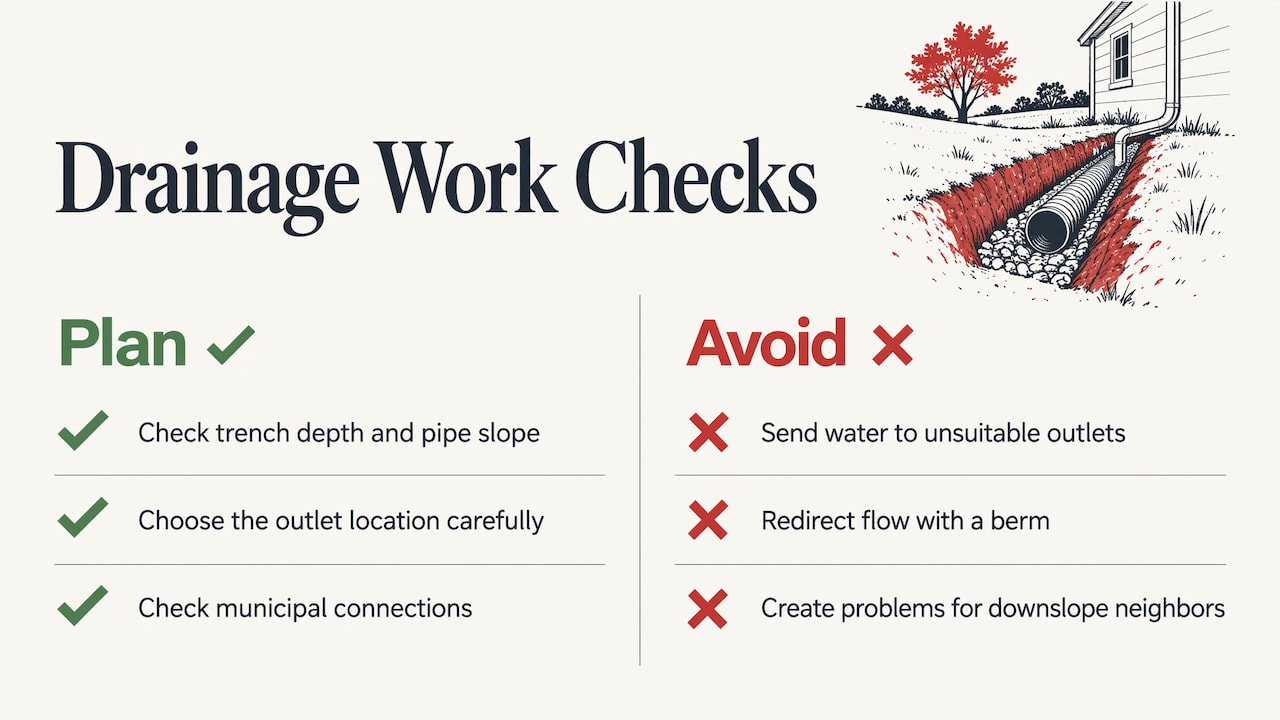
Surface fixes are easy to get wrong. The Ask Extension expert warns that sending water to an unsuitable outlet just moves the problem downhill. UC ANR adds that building a berm to redirect flow may create drainage issues elsewhere on the property. Oklahoma State stresses fixing the issue without creating a greater one for downslope neighbors.
That is why drainage is excavation work as much as landscaping. Trench depth, pipe slope, outlet location and any connection to a municipal system all matter. Our excavation and land grading crews build the slope, and for concentrated surface water we install trench drains. Where a catch basin is the weak point, see our guide to catch basin repair.
The same logic applies to hard surfaces. A patio or pool deck needs a deliberate slope and drain, as this overview of pool deck drainage slope explains. Water pooling on pavement is covered in our driveway flooding guide, and a driveway that is dropping is covered in driveway sinking.
When the Problem Is Plumbing, Not Landscaping
Some wet yards will never be fixed by grading, because the water is coming from your pipes. Prince George’s County suggests turning off the main water valve and watching the water meter, or comparing water bills with the same period last year. WSOC-TV’s guide to underground pipe trouble lists a sudden jump in bills, a meter moving with all fixtures off, pressure loss, unusually green grass patches, sunken soil and sewage smells as clues.
If you see those signs, the next step is finding the leak without digging up the whole yard. Our water line leak detection process and video inspection show what is happening inside a line. If a sewer line is the culprit, trenchless sewer repair can replace buried pipe without tearing up your yard. Water already inside the house? Start with basement drain backup or plumbing water damage.
One ownership point: Rockville’s guide says damaged private drainage, such as a French drain, is the owner’s responsibility, while city-owned structures go to the city. Lowe’s guidance adds that connecting a drain to any municipal, county or state system means contacting local authorities first. Permits are part of our turnkey approach, so that step does not fall on you.
Our View: Diagnose First, Then Build
Most yard drainage jobs we see in Denver are really two questions: where is the water coming from, and where should it go? A trench drain installed on top of a leaking line fixes nothing, and a leak repair does little if the grade still sends roof water at the foundation.
That is why we handle plumbing and excavation under one roof. We inspect the pipes, plan the grade and drains, pull the permits and clean up the site, so you deal with one contact instead of coordinating several. Our approach is built around Denver’s climate and infrastructure, and we answer emergencies around the clock.
Scott
Get the Whole Problem Solved
PipeX provides excavation, land grading, trench drains, catch basin and storm drain work, video inspection, and water and sewer line repair for homeowners, businesses, developers and municipalities. If water is pooling near a building or you suspect a buried line, start with our plumbing services and request a quote.

For active flooding or sewage, use our 24/7 emergency line.
FAQ
How do I fix bad drainage in my yard?
Match the fix to the cause: regrade low spots, extend downspouts, improve compacted soil, or add a French drain, trench drain or catch basin for concentrated water. If the wet area never dries, check for a leaking pipe first. We handle the inspection, excavation and permits together.
Who do I call to fix a drainage issue in my yard?
Call a contractor that does both excavation and plumbing, since the cause can be either. PipeX covers grading, drains and water and sewer lines in Denver. Problems with city-owned drainage structures go to the city.
Do rocks help with drainage in a yard?
Rocks are part of a French drain, where gravel surrounds a perforated pipe. Loose decorative rocks that block a runoff path can make ponding worse, and Harrison, N.Y. advises removing or relocating them in that case.
How long should water stay in my yard after rain?
A day or two is normal. The Northern Virginia district treats puddles or soggy areas that persist for several days, or never go away, as a wetness problem. That is the point to have the yard looked at.
Sources
- Go With the Flow! A Homeowner’s Guide, City of Rockville
- Wet Yard: Solving Drainage Problems, Northern Virginia Soil and Water Conservation District
- Yard Drainage: Everything You Need to Know, H2OC
- 6 Common Causes of Drainage Problems, Harrison, N.Y.
- Addressing Drainage Issues in the Urban Landscape, Oklahoma State University Extension
- Landscape Drainage for Homeowners, Illinois Extension
- Common Soil Problems, University of Maryland Extension
- Water drainage from rain downspout, Ask Extension
- Garden Drainage, UC Agriculture and Natural Resources
- Residential Drainage Manual, Prince George’s County
- The warning signs of trouble with underground pipes, WSOC-TV
- How to Solve Yard Drainage Problems, Lowe’s